Creator Eric Kripke Talks "Revolution"
By Jamie Ruby
 Eric Kripke is known to many fans as the creator and executive producer of the popular series Supernatural, but more recently he has also been working on his newest project with J.J. Abrams, Revolution, which he also executive produces.
Kripke recently talked to the digital media about the new NBC series.
NBC Conference Call
Creator and Executive Producer of Revolution Eric Kripke
October 11, 2012
9:15 a.m. PT
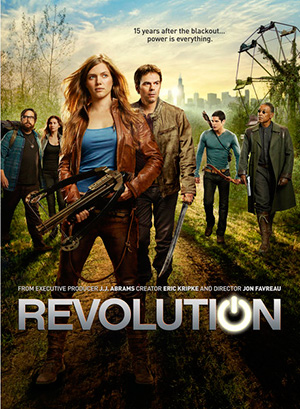 QUESTION: Can you talk a little bit about the decision to downgrade Maggie from series regular and then eventually write her out?
ERIC KRIPKE: Yeah, sure. What it really came down to more than any other decision, Anna Lise is a wonderful actress and I love that character. I sort of have a bad habit in the shows that I run of killing off the people that I love, and I think Maggie was one of those.
I think we decided internally very early on that it was really important to show that this world had very real stakes, and that it was truly dangerous. And because you’re not close to hospitals, you’re not close to paramedics, you’re not close to help, and we very quickly realized that the scariest thing we could do was to kill the doctor among them.
And so it was purely a creative decision about really putting a sharp - giving the world the real charge of danger, so that as we move forward in the series we want the audience to really understand that nobody is safe, including the main characters, and bring that suspense as the series continues because we think that’s honest to the world we’re trying to create here.
QUESTION: Okay. In next week’s episode, it looks like we’re meeting Neville’s wife, played by Kim Raver. Can you talk a little bit about what we’re going to see, in terms of his backstory and who he was?
ERIC KRIPKE: Yeah. Yeah. What’s interesting about the blackout in the show and where we like to explore and we want to explore more and more as the show goes on is what a transformative experience it was for so many people. And who they were in the old world has nothing to do with who they are now. And there’s a bit of that in the pilot, which we were always amused by the idea that he’s this violent strong man post-blackout, but pre-blackout he was an insurance adjuster.
And so we were really interested in exploring that backstory more and seeing how his character, who before the blackout was pretty mild mannered and maybe a little submissive, and how did he transform into the violent psychopath that he is today? And then meeting his wife. And right now, basically, we’re planting Kim now and then we’re going to meet her in the present day and really explore her character a couple episodes down the line. And we’re going to see how a very normal suburban wife before the blackout, post-blackout transformed into a Lady Macbeth.
QUESTION: Going back to the pilot when the blackout happened, it looks like it was very gradual over the whole Earth. Should we be reading into that, looking for clues as to the origin of the blackout, or did that just look cool to have that sweep of darkness over the Earth?
ERIC KRIPKE: You should look for clues everywhere is the short answer. The longer answer is there was a phenomenon that we have up our sleeve as to what caused the blackout, and what you saw in that globe shot is an accurate representation of what we are working on. But right now we’re currently in the writers room. We’re talking dangerously about revealing that secret before the end of the first season. So again, it’s my philosophy of not being too precious with anything. So we may reveal the secret sooner than later.
QUESTION: The secret of why...
ERIC KRIPKE: Why the lights went off. Yeah, the secret of what caused the lights to go out.
QUESTION: Congratulations on the Season 1 pickup.
ERIC KRIPKE: Oh, thank you very much. Thank you.
QUESTION: So when you say that comment about maybe revealing what caused the blackout sooner rather than later, does that mean - because some shows will drag something like that out for a season or two, so do you want to reveal that at the absolute latest in the Season 1 finale?
ERIC KRIPKE: We’re still working on that, so I don’t really have that answer for you. I just know that for me the longer you drag out an answer, the more pressure there is that that answer is the greatest answer ever given in the history of man. And frankly, I’m just not that smart.
So I would prefer we answer questions quickly and then ask more questions, and not close - answer a question and then open a door to a whole other bigger room. And that’s what we have and we’ve designed a mythology that even if I do answer the question about what caused the blackout, it leads directly to a bigger and scarier mystery.
So anyway, for me it’s about keeping the mythology moving at a good pace and not dragging anything out too much.
QUESTION: Did the full season pickup mean that you were able to go ahead with some story ideas and arcs that you’d maybe put on the back burner in case NBC did cut the episode short?
ERIC KRIPKE: Well, you know television showrunners are a foolishly optimistic bunch. And I think we were designing our story lines in the hopes that there would be a full season pickup. And then it was more like I was designing the story line for 22, and then in my back pocket I had a nuclear failsafe that it really looked everything was going off the cliff I had an emergency contingency plan to wrap everything up very quickly.
But obviously I’m very thankful to the network that they gave us the opportunity to be able to tell the story.
SCIFI VISION: I read that Grace is coming back, can you talk a little bit about that? Because she’s really an interesting character that we’d want to know more about.
 ERIC KRIPKE: Yeah, I can’t reveal too much, because she’s right in the dead center of where the mythology is. But I will say that we continue to explore and expand on that mythology. We see her again - I think the next time we see here again is episode 7, so not too far away. And we see who Randall is, this person who kidnapped her in episode 2, and we get to learn more about him. And we start to expand it because she is under duress with this character Randall, and she’s in a dangerous position right now and we start to tease that out.
Right now we’re really dropping bread crumbs for it, because on the second half of the season Grace and Randall and what’s happening with their story line really begins to play a huge, huge part in the main story line of the show.
SCIFI VISION: Awesome. And can you talk just a bit about how you came up with the whole concept for the show?
ERIC KRIPKE: Yeah, sure. I’m a huge fan of Star Wars, I’m a huge fan of Lord of the Rings, I’m a huge fan of that kind of Joseph Campbell classic, mythic, hero’s journey storytelling, those big grand adventures. And those are the kind of stories that are more often serviced in movies than they are on television.
But I think TV is actually a perfect format for that kind of storytelling because those are such big sprawling stories and you have so many more hours in TV to really explore all the different facets of a world and the characters that live in that world. And that you could give it really epic scope, but very intimate character focus.
So for me, I was always really interested in taking that big sprawling adventure format, that big quest format and putting it in television when you can really explore it episodically, and so that’s really where the idea started. And, you know I’m a huge fan of Star Wars. I’m also a huge fan of Steven King’s The Stand, and I really like the idea of rather than setting it in some fantasy kingdom to set the story line in some kind of transformed America, which is in a very strange way relatable and familiar to your audience, because it’s things that they’ve seen before, but just transformed overgrown with vines and all that.
So it started from the idea of where can we create this mythic quest, and then from there it was working, you know J.J. and his whole team at Bad Robot and we were talking about like, “Okay, what would transform America, and would it be nuclear war, would it be disease?” And we all felt like we’ve seen that a million times before. And they had been kicking around an idea of, “What would happen if there was a global blackout?” And I jumped right on that idea. I’m like, “That’s perfect. That’s the way to kick off the show.”
And that’s really interesting and provocative and I think a really relatable concept because I think everybody feels how over-reliant we are on technology, and so it becomes interesting commentary to explore what would happen if we removed all technology overnight.
SCIFI VISION: Right, we’d all go crazy without cell phones, I think.
ERIC KRIPKE: Yeah. No, yeah, is anyone more frustrated than when their phone or computer freezes, or feel more helpless [than] when there’s a blackout in their house? And that’s just for a couple of hours. And so we’re precariously balanced as a society and if you pull that rug out from under us things would get bad really quickly.
We did a lot of homework and research and they’ve had - there’s been Congressional reports, there’s been think tank reports about what would happen if the national grid were to really go down and how quickly it would happen. And I’ll say this, if anything we’re glamorizing it on this show. I think what would actually happen in the result of a global blackout would be much hairier than even what we’re depicting.
QUESTION: How long do you think you can keep the quest for Danny going before you really need to shake things up? Can you talk a bit about that?
ERIC KRIPKE: I can, and I can give a very specific answer. We can keep that quest going until episode 10, and then we shake things up. Again, this is absolutely my MO of show writing. They catch up to Danny in episode 10 and we climax that story, because you can’t keep that story going forever. And we never had any intention of keeping the search for Danny going forever.
It was only a way to introduce - bring the audience into the world and introduce them to the characters on a nice clean, simple story line as the prologue to a much bigger story. But I would say by episode 10 we will have played that prologue out and it’s time to begin the next chapter of the show and it’s time to explore much more why the show is in fact titled Revolution.
QUESTION: How hard will it be for Charlie going forward, in terms of hope, not only to find Danny, but just in general for her own survival?
ERIC KRIPKE: That’s the big character challenge for her, she starts out as a very hopeful, very optimistic, even in some ways naïve character. Again, there’s a very classic archetype that Charlie fits into, everything from Luke Skywalker to Dorothy Gale to Frodo, and this idea of the innocent being thrown out into the big bad world.
And for Charlie the question is is can she become more experienced, tougher, stronger without losing hope and without losing her soul? And when she’s exposed to that larger world, that’s a big threat, and we play that of how much duress and hardship can she faced before she loses what’s truly special about her, which is this belief in mankind and this belief that things can get better, because if she doesn’t have that then she’s lost and in a way we’re all lost. So that becomes one of her central character conflicts as the series proceeds.
QUESTION: Is this a full 22 episode season?
ERIC KRIPKE: Yes, it is.
QUESTION: Great. I was hoping you’d say that, and not say, “No, it’s 13.”
ERIC KRIPKE: Yeah.
QUESTION: The thing I find most amazing, you’re glossing over what will happen, in your research, how desperate does it get if something like this does happen, and how likely is something like this to happen in our real world?
 ERIC KRIPKE: Oh, well, first of all, in terms of how likely it is, obviously we’re all hopeful it won’t happen.
But some research we found was in electric magnetic storms, solar flares, which have the possibility to knock out the national grid. And what we found they were saying, at least in some of the articles I read, that because we’re entering a period of increased solar activity, and there’s this insane statistic which is the likelihood of something of a storm being generated that’s big enough to potentially do this over the next ten years, is a crazy percentage. It’s like 10%. That’s not say that it actually will do it, but they’re saying that the potential exists, which for me is terrifying.
And in terms of what it would create and the problems it would cause, they’re really substantial because there’s really a lot of fresh water that is piped into locations that you can’t actually get to. And then, what’s more is even if you live by standing fresh water it’s electric pumps that are keeping the majority of the sewage out of it. So there would be incredible water shortages and dysentery and disease that all begin immediately if something like this were to really happen. And then it’s about how would the police or the government maintain order without any sort of coordination or communication?
And there was a solar storm that caused the Ggrid to go out. God, it was somewhere in Canada. It was a Canadian city. It might have been Montreal or maybe Quebec, I...
QUESTION: I think so, yeah I remember hearing about that, yeah.
ERIC KRIPKE: Yeah, yeah, and it knocked out their grid for days, and by the last few days they were having a difficult time maintaining social order. There were runs on grocery stores. There was looting. And at the end of the day, what’s that quote, like you’re only 48 hours away from attacking your neighbor at any given moment? And at the end of day people are starving, people - if people are starving and if people are thirsty and they need to keep their families alive, people become desperate quickly.
And there’s real world examples of this all over the place and so if this were to happen over a sustained period where there wasn’t any of that - where there wasn’t that type of communication over weeks, and then months, I think maintaining social order would be very, very difficult.
QUESTION: You’re also the creator on one of my other favorite shows, Supernatural. How much time are you able to spend at that, or are you handing that over to somebody else now, or how does that work?
ERIC KRIPKE: I don’t spend as much time over there as I would like because this one’s got my hands full at the moment. But I will say that Bog Singer and Jeremy Carver, who are running that show are doing an absolutely incredible job and watching Supernatural go is like watching my child go off to college. And I don’t necessarily have control over it, but I’m so proud of what they’re doing.
QUESTION: Was there something in Giancarlo Esposito’s portrayal of the cold, calculating villain…in Breaking Bad that you thought would make him a great casting choice for the role of Captain Tom Neville?
ERIC KRIPKE: Well, yeah, only in that Giancarlo is a world-class actor and frankly we were shocked that he was willing to partner up with us because we felt like we were like kind of like, “Why [does] such a classy actor want to hang out with such shady people?” But I was a huge fan of his performance in Breaking Bad, but I’ve been a fan of his from long before that and we’re just honored to have him be a part of the show.
And he brings so much heft and depth and emotion to Neville, who is not obviously the same character as that character, because Neville’s got moments of vulnerability and moments of humanity. And he’s just a really interesting complicated character that Giancarlo makes so much better than what is on the page.
And it’s true because he’s exactly the type of actor you want to work with because you can write any dialogue and he makes it about five times better than it actually is. And I’m just honored to be working with him. And then on top of that, it’s like the government actually has designated him the nicest man in America. He couldn’t be a sweeter, more gracious, more open-hearted collaborative guy, and someone who is that talented and that kind-hearted is really one in a million, and I just love working with him.
QUESTION: My question had to do with Miles. We’re very early in the season and we’ve already learned so much about his background with the militia, and now Rachel’s disappearance. How long do you guys think or plan on keeping that information from the rest of the group? How long or how many secrets does he have (hiding) back there?
ERIC KRIPKE: Well, the good news is it’s been years. We’ve only revealed two or three episodes of what has happened in his colorful and mysterious past, and obviously there’s an endless amount of material in terms of what he’s done and what he’s been through.
Certainly within Season 1 we reveal what the story line with Rachel was all about and reveal not just to the audience, but to Charlie, which I think will be pretty explosive for Charlie to hear. And we’ll reveal it, because again the good news is is there’s always more.
And Miles - in the first of the ten episodes we really start to flesh out his relationship with General Monroe, I think in a very tragic, emotional, Cain and Abel kind of way, and we really start to understand who those two men were and Miles’ role in forming this militia, which is now obviously the enemy of the show - or the enemy of the heroes in the show.
And so, we’ll just keep exploring it because there’s a lot of material in his background that we can touch on and reveal. So like I said, we’ll answer some questions and then we’ll ask some more.
QUESTION: (General Monroe) (unintelligible) journey that he’s going to have to face Monroe at some point.
ERIC KRIPKE: Yeah, no, that’s true. I think that’s hanging over his head that every step he takes closer to Philadelphia is a step he takes closer to Monroe. And in episode 10 they confront each other for the first time in years, and we think it’ll be pretty explosive and emotional. And that hangs over his head that he’s on this mission and he’s trying to do it to help out his niece and maybe redeem himself.
But he knows that he’s also going to have to face his darkest fears, and that is General Monroe, because he has such a close and emotional relationship with him and that they still really love each other. When they see other they’re not sure whether they’re going to kill each other [or] hug each other. And we think it’s really interesting that the hero of the show and the big bad of the show have such a close relationship.
QUESTION: I was wondering if you could talk a little about Rachel’s motivations and the direction her character’s going in?
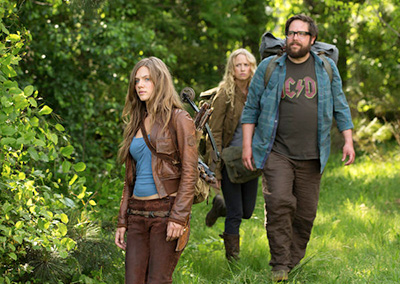 ERIC KRIPKE: Yeah, sure. Certain ones are a little mysterious, so I have to be a little cagey, because we reveal some things. But basically, she’s obviously holding on to certain secrets about why the power went out and we’ll reveal in the next episode on Monday exactly - we’ll reveal a little more about what she in fact knows about the blackout.
And Monroe’s been keeping her as sort of a - in a gilded cage kind of prisoner. Although with occasional torture, so it’s not so fun. But she’s strong and we’re so smitten with what Elizabeth is doing with the character that we’re just writing more and more and more for her, because she’s so good. And so she’s a very strong character, but everything changes when Danny finally arrives in Philadelphia, which he will this coming Monday.
And so now General Monroe has Rachel where he wants her, because she doesn’t really care about her own well-being, but of course she cares about the well-being of her son. And so he’s really able to twist her arm and forced her to reveal things that she hasn’t revealed to him yet. But she, of course, is smart and heroic and is desperately searching for a way out of the predicament that she’s in.
QUESTION: And are we going to see Nate and Charlie’s relationship develop more? Is he going to be sticking around?
ERIC KRIPKE: Yeah, the short answer, yes, but over the sweep of the season he’s going to be spending some time in Philadelphia, we’re going to start to understand what his world is like within the world of the militia. But he’s certainly going to interact with Charlie again and he has a bumpy road ahead for him.
Eric Kripke is known to many fans as the creator and executive producer of the popular series Supernatural, but more recently he has also been working on his newest project with J.J. Abrams, Revolution, which he also executive produces.Kripke recently talked to the digital media about the new NBC series.
NBC Conference Call
Creator and Executive Producer of Revolution Eric Kripke
October 11, 2012
9:15 a.m. PT
QUESTION: Can you talk a little bit about the decision to downgrade Maggie from series regular and then eventually write her out? ERIC KRIPKE: Yeah, sure. What it really came down to more than any other decision, Anna Lise is a wonderful actress and I love that character. I sort of have a bad habit in the shows that I run of killing off the people that I love, and I think Maggie was one of those.
I think we decided internally very early on that it was really important to show that this world had very real stakes, and that it was truly dangerous. And because you’re not close to hospitals, you’re not close to paramedics, you’re not close to help, and we very quickly realized that the scariest thing we could do was to kill the doctor among them.
And so it was purely a creative decision about really putting a sharp - giving the world the real charge of danger, so that as we move forward in the series we want the audience to really understand that nobody is safe, including the main characters, and bring that suspense as the series continues because we think that’s honest to the world we’re trying to create here.
QUESTION: Okay. In next week’s episode, it looks like we’re meeting Neville’s wife, played by Kim Raver. Can you talk a little bit about what we’re going to see, in terms of his backstory and who he was?
ERIC KRIPKE: Yeah. Yeah. What’s interesting about the blackout in the show and where we like to explore and we want to explore more and more as the show goes on is what a transformative experience it was for so many people. And who they were in the old world has nothing to do with who they are now. And there’s a bit of that in the pilot, which we were always amused by the idea that he’s this violent strong man post-blackout, but pre-blackout he was an insurance adjuster.
And so we were really interested in exploring that backstory more and seeing how his character, who before the blackout was pretty mild mannered and maybe a little submissive, and how did he transform into the violent psychopath that he is today? And then meeting his wife. And right now, basically, we’re planting Kim now and then we’re going to meet her in the present day and really explore her character a couple episodes down the line. And we’re going to see how a very normal suburban wife before the blackout, post-blackout transformed into a Lady Macbeth.
QUESTION: Going back to the pilot when the blackout happened, it looks like it was very gradual over the whole Earth. Should we be reading into that, looking for clues as to the origin of the blackout, or did that just look cool to have that sweep of darkness over the Earth?
ERIC KRIPKE: You should look for clues everywhere is the short answer. The longer answer is there was a phenomenon that we have up our sleeve as to what caused the blackout, and what you saw in that globe shot is an accurate representation of what we are working on. But right now we’re currently in the writers room. We’re talking dangerously about revealing that secret before the end of the first season. So again, it’s my philosophy of not being too precious with anything. So we may reveal the secret sooner than later.
QUESTION: The secret of why...
ERIC KRIPKE: Why the lights went off. Yeah, the secret of what caused the lights to go out.
QUESTION: Congratulations on the Season 1 pickup.
ERIC KRIPKE: Oh, thank you very much. Thank you.
QUESTION: So when you say that comment about maybe revealing what caused the blackout sooner rather than later, does that mean - because some shows will drag something like that out for a season or two, so do you want to reveal that at the absolute latest in the Season 1 finale?
ERIC KRIPKE: We’re still working on that, so I don’t really have that answer for you. I just know that for me the longer you drag out an answer, the more pressure there is that that answer is the greatest answer ever given in the history of man. And frankly, I’m just not that smart.
So I would prefer we answer questions quickly and then ask more questions, and not close - answer a question and then open a door to a whole other bigger room. And that’s what we have and we’ve designed a mythology that even if I do answer the question about what caused the blackout, it leads directly to a bigger and scarier mystery.
So anyway, for me it’s about keeping the mythology moving at a good pace and not dragging anything out too much.
QUESTION: Did the full season pickup mean that you were able to go ahead with some story ideas and arcs that you’d maybe put on the back burner in case NBC did cut the episode short?
ERIC KRIPKE: Well, you know television showrunners are a foolishly optimistic bunch. And I think we were designing our story lines in the hopes that there would be a full season pickup. And then it was more like I was designing the story line for 22, and then in my back pocket I had a nuclear failsafe that it really looked everything was going off the cliff I had an emergency contingency plan to wrap everything up very quickly.
But obviously I’m very thankful to the network that they gave us the opportunity to be able to tell the story.
SCIFI VISION: I read that Grace is coming back, can you talk a little bit about that? Because she’s really an interesting character that we’d want to know more about.
ERIC KRIPKE: Yeah, I can’t reveal too much, because she’s right in the dead center of where the mythology is. But I will say that we continue to explore and expand on that mythology. We see her again - I think the next time we see here again is episode 7, so not too far away. And we see who Randall is, this person who kidnapped her in episode 2, and we get to learn more about him. And we start to expand it because she is under duress with this character Randall, and she’s in a dangerous position right now and we start to tease that out. Right now we’re really dropping bread crumbs for it, because on the second half of the season Grace and Randall and what’s happening with their story line really begins to play a huge, huge part in the main story line of the show.
SCIFI VISION: Awesome. And can you talk just a bit about how you came up with the whole concept for the show?
ERIC KRIPKE: Yeah, sure. I’m a huge fan of Star Wars, I’m a huge fan of Lord of the Rings, I’m a huge fan of that kind of Joseph Campbell classic, mythic, hero’s journey storytelling, those big grand adventures. And those are the kind of stories that are more often serviced in movies than they are on television.
But I think TV is actually a perfect format for that kind of storytelling because those are such big sprawling stories and you have so many more hours in TV to really explore all the different facets of a world and the characters that live in that world. And that you could give it really epic scope, but very intimate character focus.
So for me, I was always really interested in taking that big sprawling adventure format, that big quest format and putting it in television when you can really explore it episodically, and so that’s really where the idea started. And, you know I’m a huge fan of Star Wars. I’m also a huge fan of Steven King’s The Stand, and I really like the idea of rather than setting it in some fantasy kingdom to set the story line in some kind of transformed America, which is in a very strange way relatable and familiar to your audience, because it’s things that they’ve seen before, but just transformed overgrown with vines and all that.
So it started from the idea of where can we create this mythic quest, and then from there it was working, you know J.J. and his whole team at Bad Robot and we were talking about like, “Okay, what would transform America, and would it be nuclear war, would it be disease?” And we all felt like we’ve seen that a million times before. And they had been kicking around an idea of, “What would happen if there was a global blackout?” And I jumped right on that idea. I’m like, “That’s perfect. That’s the way to kick off the show.”
And that’s really interesting and provocative and I think a really relatable concept because I think everybody feels how over-reliant we are on technology, and so it becomes interesting commentary to explore what would happen if we removed all technology overnight.
SCIFI VISION: Right, we’d all go crazy without cell phones, I think.
ERIC KRIPKE: Yeah. No, yeah, is anyone more frustrated than when their phone or computer freezes, or feel more helpless [than] when there’s a blackout in their house? And that’s just for a couple of hours. And so we’re precariously balanced as a society and if you pull that rug out from under us things would get bad really quickly.
We did a lot of homework and research and they’ve had - there’s been Congressional reports, there’s been think tank reports about what would happen if the national grid were to really go down and how quickly it would happen. And I’ll say this, if anything we’re glamorizing it on this show. I think what would actually happen in the result of a global blackout would be much hairier than even what we’re depicting.
QUESTION: How long do you think you can keep the quest for Danny going before you really need to shake things up? Can you talk a bit about that?
ERIC KRIPKE: I can, and I can give a very specific answer. We can keep that quest going until episode 10, and then we shake things up. Again, this is absolutely my MO of show writing. They catch up to Danny in episode 10 and we climax that story, because you can’t keep that story going forever. And we never had any intention of keeping the search for Danny going forever.
It was only a way to introduce - bring the audience into the world and introduce them to the characters on a nice clean, simple story line as the prologue to a much bigger story. But I would say by episode 10 we will have played that prologue out and it’s time to begin the next chapter of the show and it’s time to explore much more why the show is in fact titled Revolution.
QUESTION: How hard will it be for Charlie going forward, in terms of hope, not only to find Danny, but just in general for her own survival?
ERIC KRIPKE: That’s the big character challenge for her, she starts out as a very hopeful, very optimistic, even in some ways naïve character. Again, there’s a very classic archetype that Charlie fits into, everything from Luke Skywalker to Dorothy Gale to Frodo, and this idea of the innocent being thrown out into the big bad world.
And for Charlie the question is is can she become more experienced, tougher, stronger without losing hope and without losing her soul? And when she’s exposed to that larger world, that’s a big threat, and we play that of how much duress and hardship can she faced before she loses what’s truly special about her, which is this belief in mankind and this belief that things can get better, because if she doesn’t have that then she’s lost and in a way we’re all lost. So that becomes one of her central character conflicts as the series proceeds.
QUESTION: Is this a full 22 episode season?
ERIC KRIPKE: Yes, it is.
QUESTION: Great. I was hoping you’d say that, and not say, “No, it’s 13.”
ERIC KRIPKE: Yeah.
QUESTION: The thing I find most amazing, you’re glossing over what will happen, in your research, how desperate does it get if something like this does happen, and how likely is something like this to happen in our real world?
ERIC KRIPKE: Oh, well, first of all, in terms of how likely it is, obviously we’re all hopeful it won’t happen. But some research we found was in electric magnetic storms, solar flares, which have the possibility to knock out the national grid. And what we found they were saying, at least in some of the articles I read, that because we’re entering a period of increased solar activity, and there’s this insane statistic which is the likelihood of something of a storm being generated that’s big enough to potentially do this over the next ten years, is a crazy percentage. It’s like 10%. That’s not say that it actually will do it, but they’re saying that the potential exists, which for me is terrifying.
And in terms of what it would create and the problems it would cause, they’re really substantial because there’s really a lot of fresh water that is piped into locations that you can’t actually get to. And then, what’s more is even if you live by standing fresh water it’s electric pumps that are keeping the majority of the sewage out of it. So there would be incredible water shortages and dysentery and disease that all begin immediately if something like this were to really happen. And then it’s about how would the police or the government maintain order without any sort of coordination or communication?
And there was a solar storm that caused the Ggrid to go out. God, it was somewhere in Canada. It was a Canadian city. It might have been Montreal or maybe Quebec, I...
QUESTION: I think so, yeah I remember hearing about that, yeah.
ERIC KRIPKE: Yeah, yeah, and it knocked out their grid for days, and by the last few days they were having a difficult time maintaining social order. There were runs on grocery stores. There was looting. And at the end of the day, what’s that quote, like you’re only 48 hours away from attacking your neighbor at any given moment? And at the end of day people are starving, people - if people are starving and if people are thirsty and they need to keep their families alive, people become desperate quickly.
And there’s real world examples of this all over the place and so if this were to happen over a sustained period where there wasn’t any of that - where there wasn’t that type of communication over weeks, and then months, I think maintaining social order would be very, very difficult.
QUESTION: You’re also the creator on one of my other favorite shows, Supernatural. How much time are you able to spend at that, or are you handing that over to somebody else now, or how does that work?
ERIC KRIPKE: I don’t spend as much time over there as I would like because this one’s got my hands full at the moment. But I will say that Bog Singer and Jeremy Carver, who are running that show are doing an absolutely incredible job and watching Supernatural go is like watching my child go off to college. And I don’t necessarily have control over it, but I’m so proud of what they’re doing.
QUESTION: Was there something in Giancarlo Esposito’s portrayal of the cold, calculating villain…in Breaking Bad that you thought would make him a great casting choice for the role of Captain Tom Neville?
ERIC KRIPKE: Well, yeah, only in that Giancarlo is a world-class actor and frankly we were shocked that he was willing to partner up with us because we felt like we were like kind of like, “Why [does] such a classy actor want to hang out with such shady people?” But I was a huge fan of his performance in Breaking Bad, but I’ve been a fan of his from long before that and we’re just honored to have him be a part of the show.
And he brings so much heft and depth and emotion to Neville, who is not obviously the same character as that character, because Neville’s got moments of vulnerability and moments of humanity. And he’s just a really interesting complicated character that Giancarlo makes so much better than what is on the page.
And it’s true because he’s exactly the type of actor you want to work with because you can write any dialogue and he makes it about five times better than it actually is. And I’m just honored to be working with him. And then on top of that, it’s like the government actually has designated him the nicest man in America. He couldn’t be a sweeter, more gracious, more open-hearted collaborative guy, and someone who is that talented and that kind-hearted is really one in a million, and I just love working with him.
QUESTION: My question had to do with Miles. We’re very early in the season and we’ve already learned so much about his background with the militia, and now Rachel’s disappearance. How long do you guys think or plan on keeping that information from the rest of the group? How long or how many secrets does he have (hiding) back there?
ERIC KRIPKE: Well, the good news is it’s been years. We’ve only revealed two or three episodes of what has happened in his colorful and mysterious past, and obviously there’s an endless amount of material in terms of what he’s done and what he’s been through.
Certainly within Season 1 we reveal what the story line with Rachel was all about and reveal not just to the audience, but to Charlie, which I think will be pretty explosive for Charlie to hear. And we’ll reveal it, because again the good news is is there’s always more.
And Miles - in the first of the ten episodes we really start to flesh out his relationship with General Monroe, I think in a very tragic, emotional, Cain and Abel kind of way, and we really start to understand who those two men were and Miles’ role in forming this militia, which is now obviously the enemy of the show - or the enemy of the heroes in the show.
And so, we’ll just keep exploring it because there’s a lot of material in his background that we can touch on and reveal. So like I said, we’ll answer some questions and then we’ll ask some more.
QUESTION: (General Monroe) (unintelligible) journey that he’s going to have to face Monroe at some point.
ERIC KRIPKE: Yeah, no, that’s true. I think that’s hanging over his head that every step he takes closer to Philadelphia is a step he takes closer to Monroe. And in episode 10 they confront each other for the first time in years, and we think it’ll be pretty explosive and emotional. And that hangs over his head that he’s on this mission and he’s trying to do it to help out his niece and maybe redeem himself.
But he knows that he’s also going to have to face his darkest fears, and that is General Monroe, because he has such a close and emotional relationship with him and that they still really love each other. When they see other they’re not sure whether they’re going to kill each other [or] hug each other. And we think it’s really interesting that the hero of the show and the big bad of the show have such a close relationship.
QUESTION: I was wondering if you could talk a little about Rachel’s motivations and the direction her character’s going in?
ERIC KRIPKE: Yeah, sure. Certain ones are a little mysterious, so I have to be a little cagey, because we reveal some things. But basically, she’s obviously holding on to certain secrets about why the power went out and we’ll reveal in the next episode on Monday exactly - we’ll reveal a little more about what she in fact knows about the blackout. And Monroe’s been keeping her as sort of a - in a gilded cage kind of prisoner. Although with occasional torture, so it’s not so fun. But she’s strong and we’re so smitten with what Elizabeth is doing with the character that we’re just writing more and more and more for her, because she’s so good. And so she’s a very strong character, but everything changes when Danny finally arrives in Philadelphia, which he will this coming Monday.
And so now General Monroe has Rachel where he wants her, because she doesn’t really care about her own well-being, but of course she cares about the well-being of her son. And so he’s really able to twist her arm and forced her to reveal things that she hasn’t revealed to him yet. But she, of course, is smart and heroic and is desperately searching for a way out of the predicament that she’s in.
QUESTION: And are we going to see Nate and Charlie’s relationship develop more? Is he going to be sticking around?
ERIC KRIPKE: Yeah, the short answer, yes, but over the sweep of the season he’s going to be spending some time in Philadelphia, we’re going to start to understand what his world is like within the world of the militia. But he’s certainly going to interact with Charlie again and he has a bumpy road ahead for him.

Latest Articles
Interviews
 Dark Matter: Amanda Brugel on Blair's Big Reveal, Her Trauma & What's Ahead in Season 2
 Wednesday, 07 October 2026
 Dark Matter Season 2: Blake Crouch on Expanding Beyond the Book, Diverging from the Main Story & More
 Monday, 28 September 2026
 Outlander: Blood of My Blood Season 2: Harriet Slater, Jamie Roy, Jeremy Irvine & Hermione Corfield on Love, War, & Separation
 Saturday, 26 September 2026
 Outlander: Blood of My Blood S2: Matthew B. Roberts & Maril Davis on Trauma, History & Storytelling
 Wednesday, 23 September 2026
 Dark Matter Season 2: Dayo Okeniyi on Leighton's Hubris & Oluko's Faith in the Box
 Tuesday, 22 September 2026
 Tommy & Tuppence: Josh Dylan and Antonia Thomas on Modernizing Agatha Christie
 Tuesday, 15 September 2026
 Jimmi Simpson Breaks Down Dillard’s Walker Family and His Shocking Turn on The Walking Dead: Dead City
 Sunday, 13 September 2026
 Aimee Garcia on Renata’s Hope, Trauma, and Walker Transformation in The Walking Dead: Dead City
 Sunday, 13 September 2026
 The Walking Dead: Dead City's Showrunner on Moving Maggie & Negan Forward, Episode 6 & Where a Potential Season 4 Could be Headed
 Thursday, 10 September 2026
 Dark Matter Season 2: Jennifer Connelly and Joel Edgerton on the Emotional New Season
 Saturday, 05 September 2026
Reviews


