Billy Campbell & Jordan Hayes Talk Helix
By Jamie Ruby
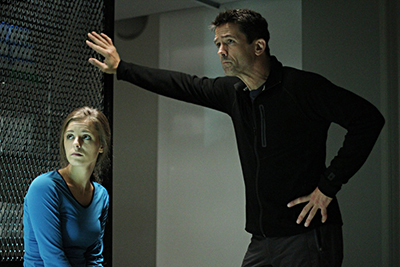
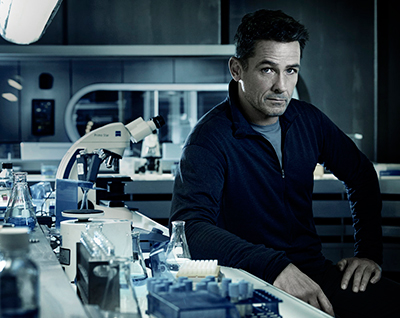
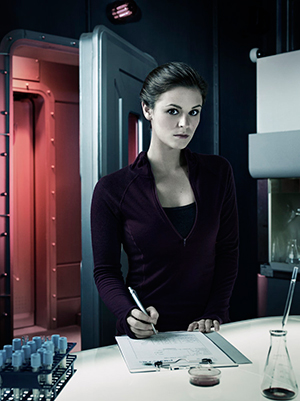
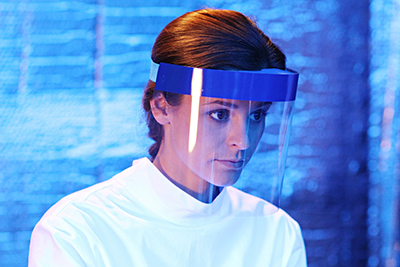
 Recently Helix premiered on Syfy and the viewership has soared. The series is a sci-fi thriller that focuses on a team of scientists from the CDC, led by Dr. Alan Farragut, played by Billy Campbell, who arrive at the research facility, Arctic Biosystems, to try to stop a deadly outbreak. The series also stars Jordan Hayes as virologist Sarah Jordan.
Campbell and Hayes recently talked to the digital media about working on the hit series.
Helix feels very real to a lot of people, because the possibility of a viral outbreak is something that could really happen, and it plays to people's fears. Hayes told SciFi Vision, "That's one of the greatest things about this show, is that it's dealing with something that is very real. And throughout history we've seen huge epidemics wipe out hundreds of millions of people. And although now thankfully we have the invention of antibiotics and we can treat things much better; it's still very real and it's still very scary, and can possibly wipe out thousands of people."
Campbell added, "I think it goes to like sort of our most primal fears, you know, the thing which you cannot see that will come in the night and kill you from the inside out. And I can't imagine much of anything creepier than that."
Lately on television it seems like the networks are airing mostly episodic shows: the storylines are generally contained in single episodes, as opposed to the story being spread throughout a season. Helix is more serialized. Campbell told the site, "This will be more along the lines of uncovering a mythology and a sort of a deeper story. So I would say that, "Watching any one particular episode would be exciting, but you wouldn't get the full excitement or fulfillment unless you sort of carried on watching all the way through."
"...Unless you're a show like Law & Order or something like that, I don't see the real reason in being all that episodic. The beauty of the serial form is telling a story over the long-term, developing situations and characters and so forth. The episodic model doesn't, and really never has, entirely appealed to me."
On a previous conference call, Steven Maeda talked about viewers getting to see new guest characters as well as locations outside the base in the form of hallucinations and such. Campbell commented on that: "What can say is that, the story does open up. And so we are not confined to the base the entire time, and that other characters do make an entrance into the story, into the situation and they change things up in a very big way."
Hayes told SciFi Vision about one of the guest stars coming up, "Jeri Ryan comes into the show... She's awesome. And that just kind of reinforces the notion of how we get to this base and we think we're dealing with one thing and it's actually dealing with several other things. So as those several other things begin to surface you'll see more and more characters come out as well."
As the series takes place in the arctic, the actors used a cold room for some of the filming. Campbell told the site, "For me it's just a great deal. I know the crew hated the cold room. First of all, the cold room wasn't really big enough. It was very limiting as a set. It was pretty small. And there was a lot of stuff flying around in the air, so the crew didn't really care for it. But they could dress how they wanted; we were dolled up in nine layers of extreme cold weather gear.
"So as in the beginning when we didn't have a cold room, when we were all on the set having to do all this strenuous stuff, we were, you know, not to be too graphic about it, but sweating a good deal. And that is more unpleasant than anything I can think of. I'd rather freeze than parboil any day.
"...So the cold room helped, I think a good deal. But in the end it was kind of untenable; it was awkward to shoot in and everyone hated it. So by the end of the show just had left the cold room behind again."
Lastly, Campbell and Hayes described each other's characters in three words for the site. The actor said that Hayes's character is "intelligent, defiant, and sexy."
Hayes added, "Alan Farragut is commendable...[a] standup guy...and sensitive." Campbell also added that Alan is "forthright."
Syfy Conference Call
Helix
Billy Campbell and Jordan Hayes
January 13, 2014
12:00 p.m. ET
 QUESTION: A lot of the Syfy programs have been a little bit lighter in tone. Their movies obviously are deliciously campy. This is a very straightforward, serious, edge-of-your-seat type series. What did you guys like about this particular series and what exactly attracted you to it?
BILLY CAMPBELL: Well, speaking for myself, I was extremely attracted to the situation, the genre, the situation. I'm a big fan of both The Thing movies, the Howard Hawks one and the John Carpenter one, and The Andromeda Strain is one of my big favorite films and so I was very attracted to the situation, and of course attracted to the fact that Ron Moore was attached. And not least of which was that we were shooting in Montreal. Jordan? Jordan?
How about you, Jordan?
JORDAN HAYES: I loved the characters. They were obviously very smartly written and very intelligent characters. Yes, it really felt, despite being a science fiction show there was a huge emphasis on the dramatic nature of the writing, and that really attracted me as an actor.
QUESTION: Billy, to the extent that it is a sci-fi show, it is very much rooted in science, it's the kind of thing that I guess could theoretically happen. Does that up the ante and make it even that much more interesting and appealing for the audience?
BILLY CAMPBELL: I would guess so. I mean, that's a question for the audience. But I would assume that to be the case. Yes, I would say, "Yes."
QUESTION: I really like the relationship that you have, kind of like a mentor relationship and student, but it's also a little more. If you can both comment on where that relationship is when the - especially in the episodes that have aired so far.
JORDAN HAYES: Billy?
BILLY CAMPBELL: I was going to let you run with that ball.
JORDAN HAYES: I think it is exactly what you just said, it's a mentor/student relationship. And I think that Sarah has a lot of admiration for Alan. And she really holds his opinion in high esteem. And she really wants to make him proud and improve her worth and impress him.
QUESTION: And for Billy, Farragut kind of walks into a storm here.
BILLY CAMPBELL: Yes.
QUESTION: How did you approach him? Your acting just seems very natural in playing an element of confusion, but also using your training to guide you, but you're stepping into something you've never encountered before either.
BILLY CAMPBELL: Well, I'm a genuinely fairly confused person anyway, so that helps. And then yes, it - I'm not sure that I thought about it very deeply. The situation is so apparent that it didn't seem to require that much in the way of depth of thought.
It's a very black-and-white situation; we come, there's an outbreak, and we have to contain it. And then things start getting confusing because we're being misdirected by Hatake, and there are all these variables. So I didn't - I'm not sure how I approached, tell you the truth, it's kind of a blur, that long ago.
SCIFI VISION: So we were down there on the set and we went to the cold room. Now I know, Billy, when I had talked to you at the Fan Expo, they didn't actually have the room that was cold or they were adding it or something at that point.
BILLY CAMPBELL: Yes.
SCIFI VISION: So how do you guys feel about that? Does it make it easier to get in the moment, or do you just not like being cold? Because I think for me I'd rather pretend to be cold.
BILLY CAMPBELL: Well, for me it's just a great deal. I know the crew hated the cold room. First of all, the cold room wasn't really big enough. It was very limiting as a set. It was pretty small. And there was a lot of stuff flying around in the air, so the crew didn't really care for it. But they could dress how they wanted; we were dolled up in nine layers of extreme cold weather gear.
So as in the beginning when we didn't have a cold room, when we were all on the set having to do all this strenuous stuff, we were, you know, not to be too graphic about it, but sweating a good deal. And that is more unpleasant than anything I can think of. I'd rather freeze than parboil any day. How about you Jordan?
JORDAN HAYES: Well, I never had to go into the cold room, actually.
BILLY CAMPBELL: You didn't, that's right you didn't.
JORDAN HAYES: I didn't, no. But I do remember being in all of our Arctic gear in July, and that was very unpleasant, yes.
BILLY CAMPBELL: So unpleasant. So the cold room helped, I think a good deal. But in the end it was untenable; it was awkward to shoot in and everyone hated it. And so by the end of the show we had left the cold room behind again.
SCIFI VISION: There's so much right now on the news about the CDC and the flu and everything going around, when you guys first started working on this and reading the script and everything, does any of it ever freak you out a bit because some of it could actually happen?
JORDAN HAYES: Yes, absolutely. That's one of the greatest things about this show is that it's dealing with something that is very real. And throughout history we've seen huge epidemics wipe out hundreds of millions of people. And although now, thankfully, we have the invention of antibiotics and we can treat things much better; it's still very real and it's still very scary and can possibly wipe out thousands of people.
BILLY CAMPBELL: I think it goes to our most primal fears, you know, the thing which you cannot see that will come in the night and kill you from the inside out. And I can't imagine much of anything creepier than that.
QUESTION: How much were you told about your characters and what was going to happen to them? For example, Sarah seems to be hiding something and she has these hand tremors; were you just told to do that Jordan, or were you also told why her hands were shaking?
JORDAN HAYES: I was told why the - I had the hand tremors before we even started shooting. So in that regard I was made aware of that particular plot point. But there were several things that will surface throughout the season that you'll see that we just weren't aware of. And I think that that worked in our favor because we were discovering things in the moment, which was nice because then we weren't telegraphing things from early on in some of the earlier episodes.
 BILLY CAMPBELL: Yes. I would have to agree with that. I prefer honestly not to know what's going on for the very reason that Jordan brings up.
QUESTION: While you were filming, did the cast ever, like at lunch, speculate who was going to be the next to be infected? And was there any kind of segregation at the lunch tables like, "Get away from me?"
BILLY CAMPBELL: There was plenty of speculation, I think. I think there was a lot of fun speculation as to who might be next in all of that.
QUESTION: Which were your favorite one or two episodes of this season?
BILLY CAMPBELL: That's hard to say, honestly. I think the one upcoming might be my favorite.
QUESTION: The third one?
BILLY CAMPBELL: The third one, yes. I don't...
JORDAN HAYES: Yes, I think the third was my favorite as well.
BILLY CAMPBELL: I know. I can't say why exactly, I haven't seen it. I haven't seen really anything. I didn't even get to watch this weekend.
QUESTION: Too bad, because it's been non-stop, at least on Saturday, which was really terrific. And what were your best and most challenging experiences during production?
BILLY CAMPBELL: I would say, I think that would just have to do with - I don't know. I don't know what was - the whole thing was a great deal of fun. I don't know what really was challenging.
It's always a bit of a challenge to imagine yourself into the circumstances. But even that was relatively easy because of stellar cast-mates and a wonderfully, creepy set and situation.
Jordan, was anything particularly difficult for you?
JORDAN HAYES: Yes, well to answer the question about the best experience, I think I just loved the team involved on the project in general. The cast and the crew really made it just such an enjoyable experience.
In terms of difficulty, I think for me the most challenging part was necessarily memorizing the dialogue and understanding exactly what we were saying. It was very important for me to have a clear understanding, or as clear as possible as I could, of the science that we were referring to. So that was a little bit like going back to school and looking at old textbooks and learning about the science all over again.
QUESTION: You both have done a lot of genre work throughout your careers. Just as fans, do you tend to gravitate toward science fiction and horror personally or is that just how things have turned out in your career?
BILLY CAMPBELL: I dig science fiction. It's kind of my - one of my favorite things just because – well, I don't know why exactly. I always have, since I was quite young, science fiction and fantasy, possibly as an escape from my - I went to military school for six years when I was quite young. And so it was a big escape for me. And I've loved it, I guess I've loved it ever since.
JORDAN HAYES: It kind of just happened for me, I guess. A fair amount of my work has been in the horror and sci-fi genre. And I guess I'm just fortunate in that regard. It wasn't a particular choice on my part, it just worked out like that.
QUESTION: Okay. Now Billy, you've had a few long-running series over the years. I was a huge fan of Once and Again and The 4400 and also The Killing and now this one, hopefully. But I was wondering, with Once and Again that was obviously a network series, but most of the series you've done since then are cable.
How do you feel that working on a network is different than cable? And why do you think that many of the imaginative shows now seem to be shifting to cable from the traditional network model?
BILLY CAMPBELL: It's I think fairly easy to understand why that's the case; there are simply more options on cable TV for storytelling.
As a network you have to please a great many people, and from all parts of the spectrum and so things necessarily get a bit…watered down. And cable is more aimed at particular niches and so you can write more specifically and more daringly. And I think that's the big difference.
QUESTION: Jordan, you were just fantastic in the first two episodes. I mean...
BILLY CAMPBELL: Hear, hear!
QUESTION: ...the range of emotions that Sarah went through were just - it made the character so compelling. What can we expect from Sarah moving forward?
 JORDAN HAYES: I think - and this is true for all of the characters - that when you're put in a situation like we are, where the stakes are so high, where the stakes are literally revealing them (unintelligible) life and death, your character gets challenged and you end up doing things that you don't think that you are capable of doing.
And I can't say too much, but I will say that Sarah's (unintelligible) some very challenging situations where she is forced to do things that she never thought that she would be capable of doing.
QUESTION: Billy, with both Alan's brother and now potentially his ex-wife turn (convector), will Alan be trying to save them or will they be trying to recruit him, a little of both? How's that going to work?
BILLY CAMPBELL: I would be pretty safe to say, I think, that he would be trying to save them. Whether he's successful and whether they are willing to be saved is another question. And the act of saving them of course is inherently dangerous and who knows what perils lie ahead for Alan and the whole team?
QUESTION: Cameron Porsandeh, who was the creator of Helix, was on my Blog Talk Radio program on Friday, and it seems that one of the things that's not being covered about the series is that he is a first-time writer/producer. This is his first television series ever and he's come from a whole different career to do this. What has been like to bring this newbie-to-television's creation to life?
BILLY CAMPBELL: It's been fantastic, really fantastic. Cameron is a very, very talented fellow, as well as a lovely human being. And I have to say it's been nothing but a deep pleasure to be working with him.
JORDAN HAYES: Yes, I have to agree. I think Cameron is extremely talented. And it is his first year. There’s something great about that because it's a very original concept and it's written in a way that's fresh. And so yes, we're just very fortunate to have someone like him on board.
QUESTION: You said earlier you haven't seen the completed episodes yet, but have you gotten any audience feedback since Syfy ran the first two episodes this weekend with limited commercial interruption? Have you heard any feedback about things like the point/counterpoint, the use of music, “Do You Know the Way to San Jose,” or the (unintelligible) scene that was at the end of Episode 2?
BILLY CAMPBELL: I haven't heard much of anything. I'm sort of cocooned down here in San Diego and I suppose will be hearing this week how the audience liked it. And I have seen a little bit on Twitter and the response seems to be mainly terrific so far. And I think people loved especially, the crazy use of the - the contrapuntal use of the music.
QUESTION: Special effects are great, including the onset special effects, how does that help you as an actor to get into that horror frame of mind?
BILLY CAMPBELL: Well goodness, you can just imagine. First of all, Jordan actually threw up in her helmet. I'm kidding, of course. But you can well imagine opening a body bag and having the goop drip out and having the skeleton there, it was all very, very conducive to that kind of feeling. Am I right, Jordan?
JORDAN HAYES: Yes, absolutely. And if you look at Peter Farragut, who's played by Neil Napier, if you look at his makeup, I mean it's just terrifying. Our special effects team in Montreal is just unbelievable. They're just so good.
BILLY CAMPBELL: Yes.
JORDAN HAYES: And I remember Neil would come and sit down next to us while we had lunch and it was unappetizing to have him sitting across from you. But no, it does help a lot. Yes, that definitely helps you get into the mind frame of, "Look at this virus, look at what it's doing to this person," because the special effects makeup is just so, so good.
BILLY CAMPBELL: Yes.
QUESTION: Jordan, we spoke with Steve Maeda and he mentioned that your character was eventually supposed to be kind of back-stabby. And he said she was going to be something like Eve from All About Eve, but that when you came in and they met you and started portraying the character, that they changed their mind with the way that the character went. Is that something that you were aware of?
JORDAN HAYES: No, it wasn't actually. Oh, that's funny. No, I wasn't aware of that at all. But I think I'm going to take it as a compliment.
And yes, as we said before, we have the luxury of discovering these characters episode by episode, and I hope that my discovery is there along the way, turns out as good as it could. Yes, I never saw her as a backstabbing kind of character so I'm happy that they changed their mind on that.
QUESTION: And I know I'm going back a little bit but I wanted to find out what sticks out most in both your minds about shooting the pilot episode. And is there either a memorable or especially challenging scene that you can recall from that shoot for both of you?
BILLY CAMPBELL: I think it harkens back to the outside stuff before we had a cold room. I mean we were, in the very first couple or few days, we were swaddled in our extreme cold weather gear on a stage with fake snow blowing around and in the middle of summer. And it was horrible. In fact I remember I got sick because I ingested so much crap, crud into my lungs I got quite sick for a couple of weeks.
So that's the thing that sticks out to me from the pilot, other than just being so insanely happy to be in Montreal again.
QUESTION: And how about you, Jordan?
JORDAN HAYES: I think the experience that standing out the most for me was the first time that I walked into the BSL4 Lab, onto that set, was great. It was just so wonderful to see all of the scientific paraphernalia and get to play around with it. And we had an actual scientist on set who was showing us exactly what every instrument did. And yes, I think that was the funnest part for me.
QUESTION: You both have a lot of technical dialogue, did you get any coaching in that area? And what's it been like to recite some of that stuff?
BILLY CAMPBELL: I did not have nearly the technical dialogue that Jordan had and I'm deeply, deeply thankful. And so I'll pass that along to Jordan.
JORDAN HAYES: You had a lot of technical dialogue. Yes, I've never found memorizing lines to be difficult. As I said early, the most important thing for me was to have a clear understanding of the science that we were referring to. And yes, we did have a scientist on set who was there to help us whenever we had questions.
And I was also fortunate enough, my older brother majored in anatomy and biology, so whenever I wanted clarification on something he would whip out one of this massive textbooks and try and teach me with drawings and in very layman terms how the science was working that I was referring to.
But no, I think it's great. I like that they didn't dumb down the science in it. I think that it adds to the show and it makes it just a more intelligent and interesting show. At times it can be difficult for the audience to understand exactly what we're referring to, but if you think about the reality this is how scientists talk, you know?
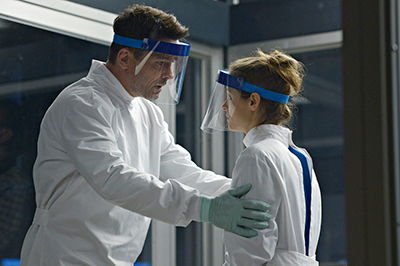 QUESTION: Yes. And the hazmat suits, how were they to work in?
JORDAN HAYES: Well, they were very real.
BILLY CAMPBELL: They were very real. They weren't built for the show, they were real hazmat suits. And I would have this to say about them: they weren't as uncomfortable as you might think, because they were ventilated. We had a pack on the back that actually ventilated the helmet. So they were pretty cool to work in.
They were a pain to put on. And they are - unless you looked like Jordan or Kyra, they're not terribly flattering. So they had that going on for them, or didn't have that going on for them in my case. So yes, that's all I'd have to say about those. Jordan?
JORDAN HAYES: I just remember one time Billy you - like Billy said, there's these ventilation packs. So the helmets were sealed off so we actually had oxygen being pumped into our helmets. And I can remember at least once, maybe twice Billy, you pulled my hose out of the pack.
So yes, no, they were fun. Yes, like Billy said, they were difficult to get into. But I really liked them and I think they look really cool on screen. So I think it worked out well.
BILLY CAMPBELL: That's because you look the way you do.
SCIFI VISION: A lot of times with series nowadays, I guess because people can't seem to keep their attention span as long as they should, I like it better that way, but a lot of shows they are always talking about, "Okay, we're going to be procedural, we're not going to be, you know, the mythology, and everything.” And it seems like this is a show that really can't be completely procedural, which I think is a great thing. Can you talk about that? Is there any kind of balance with that, or are people really going to have to watch previous episodes to understand what's going on?
BILLY CAMPBELL: By procedural, you mean episodic?
SCIFI VISION: Yes, like Mystery of the Week, you don't have to watch them all…
BILLY CAMPBELL: Yes, so it's all contained within an episode, yes. No, this will be more along the lines of uncovering a mythology and a deeper story. So I would say that watching any one particular episode would be exciting, but you wouldn't get the full excitement or fulfillment unless you sort of carried on watching all the way through.
SCIFI VISION: Yes, that's good to know. I like that better but some people complain.
BILLY CAMPBELL: I do too like it better. I don't see any reason to be - unless you're a show like Law & Order or something like that, I don't see the real reason in being all that episodic. The beauty of the serial form is telling a story over the long term, developing situations and characters and so forth. The episodic model doesn't, and really never has, entirely appealed to me.
SCIFI VISION: Great. It helps suck you in; that's what I like. If it's not continued you don't keep coming back as much.
On the other call that we did with Steven Maeda and Kyra, they talked a bit about how we are - and you mentioned early in the call that we're going to get to see a little bit more outside the base and we will get some other guest stars just because of hallucinations and all of that. Can you talk at all about that, just tease any of that that we will be seeing?
BILLY CAMPBELL: Well sure. What I can say is that the story does open up. And so we are not confined to the base the entire time, and that other characters do make an entrance into the story, into the situation and they change things up in a very big way. So yes, I would say. Jordan, do you have anything to add to that?
JORDAN HAYES: Yes, I think that we're allowed to say this because it's public knowledge, but as you probably know Jeri Ryan comes into the show and that's just kind of...
BILLY CAMPBELL: And kicks ass.
JORDAN HAYES: Yes, she's great. She's awesome. And that just reinforces the notion of how we get to this base and we think we're dealing with one thing and it's actually dealing with several other things. So as those several other things begin to surface you'll see more and more characters come out as well.
QUESTION: You had previously talked about how the cast didn't like the cold room, but did you guys have a favorite part of the set to work with, or was there something on the set that you found particularly creepy?
BILLY CAMPBELL: Jordan?
JORDAN HAYES: Yes, the sets were really great, particularly creepy.
BILLY CAMPBELL: You know what set I love? I really loved was when we did the episode with Jeremiah directing and we went to - we go off base, Kyra and I, and we go off to an abandoned listening station. And I can't tell you what happens, but it was dreadfully, dreadfully creepy. The set folks, the set designers and decorators, did an amazing, amazing job with this place. And what happens there is intensely, intensely creepy. And I think that was one of my favorite sets.
JORDAN HAYES: Yes.
QUESTION: Now with the show getting really intense, how do you manage to keep things light and fun on the set while also doing those intense scenes?
JORDAN HAYES: How do we manage?
BILLY CAMPBELL: Well Jordan is a great prankster and...
JORDAN HAYES: No, no, no, Billy is a huge prankster.
 BILLY CAMPBELL: Don't try to turn it back on me.
JORDAN HAYES: Come on.
BILLY CAMPBELL: Don't even pretend. Everyone knows that Jordan is like. It's very, very difficult to even get her to be serious for a scene. It's - she's crazy, I don't know what to say.
JORDAN HAYES: I can't speak for everyone, but I had such a great time with this cast and this crew. It was very, very easy to keep it light on set.
BILLY CAMPBELL: Yes.
JORDAN HAYES: Yes, everyone was just very friendly. And yes, we all just really got along together.
BILLY CAMPBELL: Yes, yes.
JORDAN HAYES: So it was very light and easy on set, yes.
BILLY CAMPBELL: It was wonderful. You know there are a lot of sets when actors aren't on camera they all scurry back to their individual dressing rooms and never see each other except when they're in front of the camera. And I don't think a single one of us ever went to back to our trailers between shots. We all sat as a group on the set, playing games and chit-chatting. Which was, I think, deeply appreciated by the crew, because when they called us to be in front of the camera, there we were in like 8-1/2 seconds.
JORDAN HAYES: Yes.
BILLY CAMPBELL: So yes. So it was a very special situation that way. And I have to say, I have to also add to that that it might have been my favorite crew of all time.
JORDAN HAYES: Yes, I have to agree. The crew was really, really spectacular.
BILLY CAMPBELL: Yes, yes.
QUESTION: Those scenes in the ventilating duct seemed very claustrophobic. And I was wondering, what was it like to deal with that as an actor? Was it as tight as it seemed? And how was that to negotiate as an actor?
BILLY CAMPBELL: Well, it was pretty tight. It wasn't as tight as it could have been. Mainly the pain was getting in and out of them and then scrambling around on your elbows and knees, which would begin to hurt pretty badly after a few minutes.
So it seems more claustrophobic probably in the viewing than it does in the execution because you don't see that just around the end, of course, is the opening. And so I never felt like I was trapped or anything like that. I'm not a particularly claustrophobic person to begin with, but it was less cramped than it appears.
QUESTION: Beyond Helix you also have a new Lifetime movie about Lizzie Borden that's just about to come up. I was just wondering if you could tell us a little bit about that? Were you familiar with the case before taking the role? And what was it like to go back in time on such an infamous case?
BILLY CAMPBELL: It was a good deal of fun. I don't have a big role or anything, I play Lizzie Borden's lawyer. And I knew the director from before, he directed some of The 4400.
And I was, most of all, I was just anxious to go to Halifax, which is a place that is near and dear to [my] heart, and I have many friends there. And I knew the project would be good. And so I went to Halifax.
It was a great deal of fun. I adore Christina Ricci and I think the show will be terrific. And so I had a great time. I had a wonderful time drinking Guinness at one of my favorite pubs in the world.
QUESTION: The atmosphere of the show is really, really neat, I think, with the lighting and such. And I wanted to find out if you could speak a little bit about that at all, and working with the DOP and creating that atmosphere. Anything you can speak of on that regard?
BILLY CAMPBELL: Jordan? I've been yacking a lot.
JORDAN HAYES: Yes, so our DT is Steve McNutt and he's just amazing. I don't understand lighting at all, it's kind of a mystery to me. But I think it really makes the show.
I actually didn't see the entire two hours, but from what I've seen had this huge effect on the mood of the show. And yes, he's just so incredibly talented, I think that we really lucked out getting him on board.
BILLY CAMPBELL: Yes, yes. Yes, McNutt.
QUESTION: Billy, I wanted to find out if I could get your take on Alan's and Julia's relationship on the show, and maybe what you enjoyed most about developing that on camera?
BILLY CAMPBELL: I'm not sure we did all that much about developing it on camera. I mean that's the purview of the writers. They write that stuff, they develop it, and we just kind of do what they write.
But again, with this cast it wasn't difficult to have chemistry with anyone. There were no divas, there were no monsters of any kind, except in front of the camera running around with goo coming out of our mouths. It was just a wonderful, wonderful situation. And in that case, it's really not difficult to develop chemistry with anyone.
You know, the times when it's hard to have chemistry with someone is when you don't like them as a person, and then you have to go in front of the camera and pretend to like someone or even be in love with someone that you actively dislike. That can be really difficult.
And on this show there was none of that. I actively loved everyone I worked with, which just made it so wonderful to go to work.
SCIFI VISION: Can you both quickly describe your characters in three words?
BILLY CAMPBELL: My goodness.
JORDAN HAYES: You go first, Billy.
BILLY CAMPBELL: No wait a minute, this might even be more fun. How about we describe each other's characters in three words?
SCIFI VISION: Okay, that works.
 JORDAN HAYES: Okay.
BILLY CAMPBELL: No, this is hilarious. This is wonderful. Intelligent, of course. I would say there's just a little, there's just a spark of defiance. I would say intelligent, defiant and well, sexy.
JORDAN HAYES: Okay, Alan Farragut is commendable. Yes, why not? Standup guy, I know that's not one word, but yes, standup guy. And...
BILLY CAMPBELL: Forthright.
JORDAN HAYES: ...sensitive. What?
BILLY CAMPBELL: I was trying to put your standup guy into one word and I came up with forthright.
JORDAN HAYES: Yes and that - yes, that's the perfect word. And sensitive.
BILLY CAMPBELL: I think that fairly does it, I think that does it pretty well.
Recently Helix premiered on Syfy and the viewership has soared. The series is a sci-fi thriller that focuses on a team of scientists from the CDC, led by Dr. Alan Farragut, played by Billy Campbell, who arrive at the research facility, Arctic Biosystems, to try to stop a deadly outbreak. The series also stars Jordan Hayes as virologist Sarah Jordan.Campbell and Hayes recently talked to the digital media about working on the hit series.
Helix feels very real to a lot of people, because the possibility of a viral outbreak is something that could really happen, and it plays to people's fears. Hayes told SciFi Vision, "That's one of the greatest things about this show, is that it's dealing with something that is very real. And throughout history we've seen huge epidemics wipe out hundreds of millions of people. And although now thankfully we have the invention of antibiotics and we can treat things much better; it's still very real and it's still very scary, and can possibly wipe out thousands of people."
Campbell added, "I think it goes to like sort of our most primal fears, you know, the thing which you cannot see that will come in the night and kill you from the inside out. And I can't imagine much of anything creepier than that."
Lately on television it seems like the networks are airing mostly episodic shows: the storylines are generally contained in single episodes, as opposed to the story being spread throughout a season. Helix is more serialized. Campbell told the site, "This will be more along the lines of uncovering a mythology and a sort of a deeper story. So I would say that, "Watching any one particular episode would be exciting, but you wouldn't get the full excitement or fulfillment unless you sort of carried on watching all the way through."
"...Unless you're a show like Law & Order or something like that, I don't see the real reason in being all that episodic. The beauty of the serial form is telling a story over the long-term, developing situations and characters and so forth. The episodic model doesn't, and really never has, entirely appealed to me."
On a previous conference call, Steven Maeda talked about viewers getting to see new guest characters as well as locations outside the base in the form of hallucinations and such. Campbell commented on that: "What can say is that, the story does open up. And so we are not confined to the base the entire time, and that other characters do make an entrance into the story, into the situation and they change things up in a very big way."
Hayes told SciFi Vision about one of the guest stars coming up, "Jeri Ryan comes into the show... She's awesome. And that just kind of reinforces the notion of how we get to this base and we think we're dealing with one thing and it's actually dealing with several other things. So as those several other things begin to surface you'll see more and more characters come out as well."
As the series takes place in the arctic, the actors used a cold room for some of the filming. Campbell told the site, "For me it's just a great deal. I know the crew hated the cold room. First of all, the cold room wasn't really big enough. It was very limiting as a set. It was pretty small. And there was a lot of stuff flying around in the air, so the crew didn't really care for it. But they could dress how they wanted; we were dolled up in nine layers of extreme cold weather gear.
"So as in the beginning when we didn't have a cold room, when we were all on the set having to do all this strenuous stuff, we were, you know, not to be too graphic about it, but sweating a good deal. And that is more unpleasant than anything I can think of. I'd rather freeze than parboil any day.
"...So the cold room helped, I think a good deal. But in the end it was kind of untenable; it was awkward to shoot in and everyone hated it. So by the end of the show just had left the cold room behind again."
Lastly, Campbell and Hayes described each other's characters in three words for the site. The actor said that Hayes's character is "intelligent, defiant, and sexy."
Hayes added, "Alan Farragut is commendable...[a] standup guy...and sensitive." Campbell also added that Alan is "forthright."
Syfy Conference Call
Helix
Billy Campbell and Jordan Hayes
January 13, 2014
12:00 p.m. ET
QUESTION: A lot of the Syfy programs have been a little bit lighter in tone. Their movies obviously are deliciously campy. This is a very straightforward, serious, edge-of-your-seat type series. What did you guys like about this particular series and what exactly attracted you to it? BILLY CAMPBELL: Well, speaking for myself, I was extremely attracted to the situation, the genre, the situation. I'm a big fan of both The Thing movies, the Howard Hawks one and the John Carpenter one, and The Andromeda Strain is one of my big favorite films and so I was very attracted to the situation, and of course attracted to the fact that Ron Moore was attached. And not least of which was that we were shooting in Montreal. Jordan? Jordan?
How about you, Jordan?
JORDAN HAYES: I loved the characters. They were obviously very smartly written and very intelligent characters. Yes, it really felt, despite being a science fiction show there was a huge emphasis on the dramatic nature of the writing, and that really attracted me as an actor.
QUESTION: Billy, to the extent that it is a sci-fi show, it is very much rooted in science, it's the kind of thing that I guess could theoretically happen. Does that up the ante and make it even that much more interesting and appealing for the audience?
BILLY CAMPBELL: I would guess so. I mean, that's a question for the audience. But I would assume that to be the case. Yes, I would say, "Yes."
QUESTION: I really like the relationship that you have, kind of like a mentor relationship and student, but it's also a little more. If you can both comment on where that relationship is when the - especially in the episodes that have aired so far.
JORDAN HAYES: Billy?
BILLY CAMPBELL: I was going to let you run with that ball.
JORDAN HAYES: I think it is exactly what you just said, it's a mentor/student relationship. And I think that Sarah has a lot of admiration for Alan. And she really holds his opinion in high esteem. And she really wants to make him proud and improve her worth and impress him.
QUESTION: And for Billy, Farragut kind of walks into a storm here.
BILLY CAMPBELL: Yes.
QUESTION: How did you approach him? Your acting just seems very natural in playing an element of confusion, but also using your training to guide you, but you're stepping into something you've never encountered before either.
BILLY CAMPBELL: Well, I'm a genuinely fairly confused person anyway, so that helps. And then yes, it - I'm not sure that I thought about it very deeply. The situation is so apparent that it didn't seem to require that much in the way of depth of thought.
It's a very black-and-white situation; we come, there's an outbreak, and we have to contain it. And then things start getting confusing because we're being misdirected by Hatake, and there are all these variables. So I didn't - I'm not sure how I approached, tell you the truth, it's kind of a blur, that long ago.
SCIFI VISION: So we were down there on the set and we went to the cold room. Now I know, Billy, when I had talked to you at the Fan Expo, they didn't actually have the room that was cold or they were adding it or something at that point.
BILLY CAMPBELL: Yes.
SCIFI VISION: So how do you guys feel about that? Does it make it easier to get in the moment, or do you just not like being cold? Because I think for me I'd rather pretend to be cold.
BILLY CAMPBELL: Well, for me it's just a great deal. I know the crew hated the cold room. First of all, the cold room wasn't really big enough. It was very limiting as a set. It was pretty small. And there was a lot of stuff flying around in the air, so the crew didn't really care for it. But they could dress how they wanted; we were dolled up in nine layers of extreme cold weather gear.
So as in the beginning when we didn't have a cold room, when we were all on the set having to do all this strenuous stuff, we were, you know, not to be too graphic about it, but sweating a good deal. And that is more unpleasant than anything I can think of. I'd rather freeze than parboil any day. How about you Jordan?
JORDAN HAYES: Well, I never had to go into the cold room, actually.
BILLY CAMPBELL: You didn't, that's right you didn't.
JORDAN HAYES: I didn't, no. But I do remember being in all of our Arctic gear in July, and that was very unpleasant, yes.
BILLY CAMPBELL: So unpleasant. So the cold room helped, I think a good deal. But in the end it was untenable; it was awkward to shoot in and everyone hated it. And so by the end of the show we had left the cold room behind again.
SCIFI VISION: There's so much right now on the news about the CDC and the flu and everything going around, when you guys first started working on this and reading the script and everything, does any of it ever freak you out a bit because some of it could actually happen?
JORDAN HAYES: Yes, absolutely. That's one of the greatest things about this show is that it's dealing with something that is very real. And throughout history we've seen huge epidemics wipe out hundreds of millions of people. And although now, thankfully, we have the invention of antibiotics and we can treat things much better; it's still very real and it's still very scary and can possibly wipe out thousands of people.
BILLY CAMPBELL: I think it goes to our most primal fears, you know, the thing which you cannot see that will come in the night and kill you from the inside out. And I can't imagine much of anything creepier than that.
QUESTION: How much were you told about your characters and what was going to happen to them? For example, Sarah seems to be hiding something and she has these hand tremors; were you just told to do that Jordan, or were you also told why her hands were shaking?
JORDAN HAYES: I was told why the - I had the hand tremors before we even started shooting. So in that regard I was made aware of that particular plot point. But there were several things that will surface throughout the season that you'll see that we just weren't aware of. And I think that that worked in our favor because we were discovering things in the moment, which was nice because then we weren't telegraphing things from early on in some of the earlier episodes.
BILLY CAMPBELL: Yes. I would have to agree with that. I prefer honestly not to know what's going on for the very reason that Jordan brings up. QUESTION: While you were filming, did the cast ever, like at lunch, speculate who was going to be the next to be infected? And was there any kind of segregation at the lunch tables like, "Get away from me?"
BILLY CAMPBELL: There was plenty of speculation, I think. I think there was a lot of fun speculation as to who might be next in all of that.
QUESTION: Which were your favorite one or two episodes of this season?
BILLY CAMPBELL: That's hard to say, honestly. I think the one upcoming might be my favorite.
QUESTION: The third one?
BILLY CAMPBELL: The third one, yes. I don't...
JORDAN HAYES: Yes, I think the third was my favorite as well.
BILLY CAMPBELL: I know. I can't say why exactly, I haven't seen it. I haven't seen really anything. I didn't even get to watch this weekend.
QUESTION: Too bad, because it's been non-stop, at least on Saturday, which was really terrific. And what were your best and most challenging experiences during production?
BILLY CAMPBELL: I would say, I think that would just have to do with - I don't know. I don't know what was - the whole thing was a great deal of fun. I don't know what really was challenging.
It's always a bit of a challenge to imagine yourself into the circumstances. But even that was relatively easy because of stellar cast-mates and a wonderfully, creepy set and situation.
Jordan, was anything particularly difficult for you?
JORDAN HAYES: Yes, well to answer the question about the best experience, I think I just loved the team involved on the project in general. The cast and the crew really made it just such an enjoyable experience.
In terms of difficulty, I think for me the most challenging part was necessarily memorizing the dialogue and understanding exactly what we were saying. It was very important for me to have a clear understanding, or as clear as possible as I could, of the science that we were referring to. So that was a little bit like going back to school and looking at old textbooks and learning about the science all over again.
QUESTION: You both have done a lot of genre work throughout your careers. Just as fans, do you tend to gravitate toward science fiction and horror personally or is that just how things have turned out in your career?
BILLY CAMPBELL: I dig science fiction. It's kind of my - one of my favorite things just because – well, I don't know why exactly. I always have, since I was quite young, science fiction and fantasy, possibly as an escape from my - I went to military school for six years when I was quite young. And so it was a big escape for me. And I've loved it, I guess I've loved it ever since.
JORDAN HAYES: It kind of just happened for me, I guess. A fair amount of my work has been in the horror and sci-fi genre. And I guess I'm just fortunate in that regard. It wasn't a particular choice on my part, it just worked out like that.
QUESTION: Okay. Now Billy, you've had a few long-running series over the years. I was a huge fan of Once and Again and The 4400 and also The Killing and now this one, hopefully. But I was wondering, with Once and Again that was obviously a network series, but most of the series you've done since then are cable.
How do you feel that working on a network is different than cable? And why do you think that many of the imaginative shows now seem to be shifting to cable from the traditional network model?
BILLY CAMPBELL: It's I think fairly easy to understand why that's the case; there are simply more options on cable TV for storytelling.
As a network you have to please a great many people, and from all parts of the spectrum and so things necessarily get a bit…watered down. And cable is more aimed at particular niches and so you can write more specifically and more daringly. And I think that's the big difference.
QUESTION: Jordan, you were just fantastic in the first two episodes. I mean...
BILLY CAMPBELL: Hear, hear!
QUESTION: ...the range of emotions that Sarah went through were just - it made the character so compelling. What can we expect from Sarah moving forward?
JORDAN HAYES: I think - and this is true for all of the characters - that when you're put in a situation like we are, where the stakes are so high, where the stakes are literally revealing them (unintelligible) life and death, your character gets challenged and you end up doing things that you don't think that you are capable of doing. And I can't say too much, but I will say that Sarah's (unintelligible) some very challenging situations where she is forced to do things that she never thought that she would be capable of doing.
QUESTION: Billy, with both Alan's brother and now potentially his ex-wife turn (convector), will Alan be trying to save them or will they be trying to recruit him, a little of both? How's that going to work?
BILLY CAMPBELL: I would be pretty safe to say, I think, that he would be trying to save them. Whether he's successful and whether they are willing to be saved is another question. And the act of saving them of course is inherently dangerous and who knows what perils lie ahead for Alan and the whole team?
QUESTION: Cameron Porsandeh, who was the creator of Helix, was on my Blog Talk Radio program on Friday, and it seems that one of the things that's not being covered about the series is that he is a first-time writer/producer. This is his first television series ever and he's come from a whole different career to do this. What has been like to bring this newbie-to-television's creation to life?
BILLY CAMPBELL: It's been fantastic, really fantastic. Cameron is a very, very talented fellow, as well as a lovely human being. And I have to say it's been nothing but a deep pleasure to be working with him.
JORDAN HAYES: Yes, I have to agree. I think Cameron is extremely talented. And it is his first year. There’s something great about that because it's a very original concept and it's written in a way that's fresh. And so yes, we're just very fortunate to have someone like him on board.
QUESTION: You said earlier you haven't seen the completed episodes yet, but have you gotten any audience feedback since Syfy ran the first two episodes this weekend with limited commercial interruption? Have you heard any feedback about things like the point/counterpoint, the use of music, “Do You Know the Way to San Jose,” or the (unintelligible) scene that was at the end of Episode 2?
BILLY CAMPBELL: I haven't heard much of anything. I'm sort of cocooned down here in San Diego and I suppose will be hearing this week how the audience liked it. And I have seen a little bit on Twitter and the response seems to be mainly terrific so far. And I think people loved especially, the crazy use of the - the contrapuntal use of the music.
QUESTION: Special effects are great, including the onset special effects, how does that help you as an actor to get into that horror frame of mind?
BILLY CAMPBELL: Well goodness, you can just imagine. First of all, Jordan actually threw up in her helmet. I'm kidding, of course. But you can well imagine opening a body bag and having the goop drip out and having the skeleton there, it was all very, very conducive to that kind of feeling. Am I right, Jordan?
JORDAN HAYES: Yes, absolutely. And if you look at Peter Farragut, who's played by Neil Napier, if you look at his makeup, I mean it's just terrifying. Our special effects team in Montreal is just unbelievable. They're just so good.
BILLY CAMPBELL: Yes.
JORDAN HAYES: And I remember Neil would come and sit down next to us while we had lunch and it was unappetizing to have him sitting across from you. But no, it does help a lot. Yes, that definitely helps you get into the mind frame of, "Look at this virus, look at what it's doing to this person," because the special effects makeup is just so, so good.
BILLY CAMPBELL: Yes.
QUESTION: Jordan, we spoke with Steve Maeda and he mentioned that your character was eventually supposed to be kind of back-stabby. And he said she was going to be something like Eve from All About Eve, but that when you came in and they met you and started portraying the character, that they changed their mind with the way that the character went. Is that something that you were aware of?
JORDAN HAYES: No, it wasn't actually. Oh, that's funny. No, I wasn't aware of that at all. But I think I'm going to take it as a compliment.
And yes, as we said before, we have the luxury of discovering these characters episode by episode, and I hope that my discovery is there along the way, turns out as good as it could. Yes, I never saw her as a backstabbing kind of character so I'm happy that they changed their mind on that.
QUESTION: And I know I'm going back a little bit but I wanted to find out what sticks out most in both your minds about shooting the pilot episode. And is there either a memorable or especially challenging scene that you can recall from that shoot for both of you?
BILLY CAMPBELL: I think it harkens back to the outside stuff before we had a cold room. I mean we were, in the very first couple or few days, we were swaddled in our extreme cold weather gear on a stage with fake snow blowing around and in the middle of summer. And it was horrible. In fact I remember I got sick because I ingested so much crap, crud into my lungs I got quite sick for a couple of weeks.
So that's the thing that sticks out to me from the pilot, other than just being so insanely happy to be in Montreal again.
QUESTION: And how about you, Jordan?
JORDAN HAYES: I think the experience that standing out the most for me was the first time that I walked into the BSL4 Lab, onto that set, was great. It was just so wonderful to see all of the scientific paraphernalia and get to play around with it. And we had an actual scientist on set who was showing us exactly what every instrument did. And yes, I think that was the funnest part for me.
QUESTION: You both have a lot of technical dialogue, did you get any coaching in that area? And what's it been like to recite some of that stuff?
BILLY CAMPBELL: I did not have nearly the technical dialogue that Jordan had and I'm deeply, deeply thankful. And so I'll pass that along to Jordan.
JORDAN HAYES: You had a lot of technical dialogue. Yes, I've never found memorizing lines to be difficult. As I said early, the most important thing for me was to have a clear understanding of the science that we were referring to. And yes, we did have a scientist on set who was there to help us whenever we had questions.
And I was also fortunate enough, my older brother majored in anatomy and biology, so whenever I wanted clarification on something he would whip out one of this massive textbooks and try and teach me with drawings and in very layman terms how the science was working that I was referring to.
But no, I think it's great. I like that they didn't dumb down the science in it. I think that it adds to the show and it makes it just a more intelligent and interesting show. At times it can be difficult for the audience to understand exactly what we're referring to, but if you think about the reality this is how scientists talk, you know?
QUESTION: Yes. And the hazmat suits, how were they to work in? JORDAN HAYES: Well, they were very real.
BILLY CAMPBELL: They were very real. They weren't built for the show, they were real hazmat suits. And I would have this to say about them: they weren't as uncomfortable as you might think, because they were ventilated. We had a pack on the back that actually ventilated the helmet. So they were pretty cool to work in.
They were a pain to put on. And they are - unless you looked like Jordan or Kyra, they're not terribly flattering. So they had that going on for them, or didn't have that going on for them in my case. So yes, that's all I'd have to say about those. Jordan?
JORDAN HAYES: I just remember one time Billy you - like Billy said, there's these ventilation packs. So the helmets were sealed off so we actually had oxygen being pumped into our helmets. And I can remember at least once, maybe twice Billy, you pulled my hose out of the pack.
So yes, no, they were fun. Yes, like Billy said, they were difficult to get into. But I really liked them and I think they look really cool on screen. So I think it worked out well.
BILLY CAMPBELL: That's because you look the way you do.
SCIFI VISION: A lot of times with series nowadays, I guess because people can't seem to keep their attention span as long as they should, I like it better that way, but a lot of shows they are always talking about, "Okay, we're going to be procedural, we're not going to be, you know, the mythology, and everything.” And it seems like this is a show that really can't be completely procedural, which I think is a great thing. Can you talk about that? Is there any kind of balance with that, or are people really going to have to watch previous episodes to understand what's going on?
BILLY CAMPBELL: By procedural, you mean episodic?
SCIFI VISION: Yes, like Mystery of the Week, you don't have to watch them all…
BILLY CAMPBELL: Yes, so it's all contained within an episode, yes. No, this will be more along the lines of uncovering a mythology and a deeper story. So I would say that watching any one particular episode would be exciting, but you wouldn't get the full excitement or fulfillment unless you sort of carried on watching all the way through.
SCIFI VISION: Yes, that's good to know. I like that better but some people complain.
BILLY CAMPBELL: I do too like it better. I don't see any reason to be - unless you're a show like Law & Order or something like that, I don't see the real reason in being all that episodic. The beauty of the serial form is telling a story over the long term, developing situations and characters and so forth. The episodic model doesn't, and really never has, entirely appealed to me.
SCIFI VISION: Great. It helps suck you in; that's what I like. If it's not continued you don't keep coming back as much.
On the other call that we did with Steven Maeda and Kyra, they talked a bit about how we are - and you mentioned early in the call that we're going to get to see a little bit more outside the base and we will get some other guest stars just because of hallucinations and all of that. Can you talk at all about that, just tease any of that that we will be seeing?
BILLY CAMPBELL: Well sure. What I can say is that the story does open up. And so we are not confined to the base the entire time, and that other characters do make an entrance into the story, into the situation and they change things up in a very big way. So yes, I would say. Jordan, do you have anything to add to that?
JORDAN HAYES: Yes, I think that we're allowed to say this because it's public knowledge, but as you probably know Jeri Ryan comes into the show and that's just kind of...
BILLY CAMPBELL: And kicks ass.
JORDAN HAYES: Yes, she's great. She's awesome. And that just reinforces the notion of how we get to this base and we think we're dealing with one thing and it's actually dealing with several other things. So as those several other things begin to surface you'll see more and more characters come out as well.
QUESTION: You had previously talked about how the cast didn't like the cold room, but did you guys have a favorite part of the set to work with, or was there something on the set that you found particularly creepy?
BILLY CAMPBELL: Jordan?
JORDAN HAYES: Yes, the sets were really great, particularly creepy.
BILLY CAMPBELL: You know what set I love? I really loved was when we did the episode with Jeremiah directing and we went to - we go off base, Kyra and I, and we go off to an abandoned listening station. And I can't tell you what happens, but it was dreadfully, dreadfully creepy. The set folks, the set designers and decorators, did an amazing, amazing job with this place. And what happens there is intensely, intensely creepy. And I think that was one of my favorite sets.
JORDAN HAYES: Yes.
QUESTION: Now with the show getting really intense, how do you manage to keep things light and fun on the set while also doing those intense scenes?
JORDAN HAYES: How do we manage?
BILLY CAMPBELL: Well Jordan is a great prankster and...
JORDAN HAYES: No, no, no, Billy is a huge prankster.
BILLY CAMPBELL: Don't try to turn it back on me. JORDAN HAYES: Come on.
BILLY CAMPBELL: Don't even pretend. Everyone knows that Jordan is like. It's very, very difficult to even get her to be serious for a scene. It's - she's crazy, I don't know what to say.
JORDAN HAYES: I can't speak for everyone, but I had such a great time with this cast and this crew. It was very, very easy to keep it light on set.
BILLY CAMPBELL: Yes.
JORDAN HAYES: Yes, everyone was just very friendly. And yes, we all just really got along together.
BILLY CAMPBELL: Yes, yes.
JORDAN HAYES: So it was very light and easy on set, yes.
BILLY CAMPBELL: It was wonderful. You know there are a lot of sets when actors aren't on camera they all scurry back to their individual dressing rooms and never see each other except when they're in front of the camera. And I don't think a single one of us ever went to back to our trailers between shots. We all sat as a group on the set, playing games and chit-chatting. Which was, I think, deeply appreciated by the crew, because when they called us to be in front of the camera, there we were in like 8-1/2 seconds.
JORDAN HAYES: Yes.
BILLY CAMPBELL: So yes. So it was a very special situation that way. And I have to say, I have to also add to that that it might have been my favorite crew of all time.
JORDAN HAYES: Yes, I have to agree. The crew was really, really spectacular.
BILLY CAMPBELL: Yes, yes.
QUESTION: Those scenes in the ventilating duct seemed very claustrophobic. And I was wondering, what was it like to deal with that as an actor? Was it as tight as it seemed? And how was that to negotiate as an actor?
BILLY CAMPBELL: Well, it was pretty tight. It wasn't as tight as it could have been. Mainly the pain was getting in and out of them and then scrambling around on your elbows and knees, which would begin to hurt pretty badly after a few minutes.
So it seems more claustrophobic probably in the viewing than it does in the execution because you don't see that just around the end, of course, is the opening. And so I never felt like I was trapped or anything like that. I'm not a particularly claustrophobic person to begin with, but it was less cramped than it appears.
QUESTION: Beyond Helix you also have a new Lifetime movie about Lizzie Borden that's just about to come up. I was just wondering if you could tell us a little bit about that? Were you familiar with the case before taking the role? And what was it like to go back in time on such an infamous case?
BILLY CAMPBELL: It was a good deal of fun. I don't have a big role or anything, I play Lizzie Borden's lawyer. And I knew the director from before, he directed some of The 4400.
And I was, most of all, I was just anxious to go to Halifax, which is a place that is near and dear to [my] heart, and I have many friends there. And I knew the project would be good. And so I went to Halifax.
It was a great deal of fun. I adore Christina Ricci and I think the show will be terrific. And so I had a great time. I had a wonderful time drinking Guinness at one of my favorite pubs in the world.
QUESTION: The atmosphere of the show is really, really neat, I think, with the lighting and such. And I wanted to find out if you could speak a little bit about that at all, and working with the DOP and creating that atmosphere. Anything you can speak of on that regard?
BILLY CAMPBELL: Jordan? I've been yacking a lot.
JORDAN HAYES: Yes, so our DT is Steve McNutt and he's just amazing. I don't understand lighting at all, it's kind of a mystery to me. But I think it really makes the show.
I actually didn't see the entire two hours, but from what I've seen had this huge effect on the mood of the show. And yes, he's just so incredibly talented, I think that we really lucked out getting him on board.
BILLY CAMPBELL: Yes, yes. Yes, McNutt.
QUESTION: Billy, I wanted to find out if I could get your take on Alan's and Julia's relationship on the show, and maybe what you enjoyed most about developing that on camera?
BILLY CAMPBELL: I'm not sure we did all that much about developing it on camera. I mean that's the purview of the writers. They write that stuff, they develop it, and we just kind of do what they write.
But again, with this cast it wasn't difficult to have chemistry with anyone. There were no divas, there were no monsters of any kind, except in front of the camera running around with goo coming out of our mouths. It was just a wonderful, wonderful situation. And in that case, it's really not difficult to develop chemistry with anyone.
You know, the times when it's hard to have chemistry with someone is when you don't like them as a person, and then you have to go in front of the camera and pretend to like someone or even be in love with someone that you actively dislike. That can be really difficult.
And on this show there was none of that. I actively loved everyone I worked with, which just made it so wonderful to go to work.
SCIFI VISION: Can you both quickly describe your characters in three words?
BILLY CAMPBELL: My goodness.
JORDAN HAYES: You go first, Billy.
BILLY CAMPBELL: No wait a minute, this might even be more fun. How about we describe each other's characters in three words?
SCIFI VISION: Okay, that works.
JORDAN HAYES: Okay. BILLY CAMPBELL: No, this is hilarious. This is wonderful. Intelligent, of course. I would say there's just a little, there's just a spark of defiance. I would say intelligent, defiant and well, sexy.
JORDAN HAYES: Okay, Alan Farragut is commendable. Yes, why not? Standup guy, I know that's not one word, but yes, standup guy. And...
BILLY CAMPBELL: Forthright.
JORDAN HAYES: ...sensitive. What?
BILLY CAMPBELL: I was trying to put your standup guy into one word and I came up with forthright.
JORDAN HAYES: Yes and that - yes, that's the perfect word. And sensitive.
BILLY CAMPBELL: I think that fairly does it, I think that does it pretty well.

Latest Articles
Interviews
 I See the Demon: Alexis Zollicoffer, Noah Kershisnik & Dave Martinez on Trust and Deception
Wednesday, 28 October 2026
 Mackenzie Crook & Pearce Quigley on Small Prophets' Origins, Characters & Creatures
Tuesday, 27 October 2026
 Dark Matter: Jimmi Simpson on Ryan's Strengths & Acting Opposite Himself in Season 2
Sunday, 25 October 2026
 Outlander: Blood of My Blood - Sam Retford & Bobby Rainsbury on Dougal's Rescue & Maura's Loyalties
Friday, 23 October 2026
 Outlander: Blood of My Blood Director Emer Conroy on Battle Logistics, Camera Choices and Character Moments
Sunday, 18 October 2026
 Outlander: Blood of My Blood Showrunner Matthew B. Roberts on Introducing Gerard Grey, Book Lore Connections & Telling Women's Stories
Friday, 16 October 2026
 Orion: Drew Van Acker & Debby Ryan on Layered Performances & Shifting Truths
Monday, 12 October 2026
 Guillermo Navarro on Pan’s Labyrinth’s 20-Year Legacy, Oscar Win & the Craft of Cinematography
Sunday, 11 October 2026
 Orion Director Jaco Bouwer on Building Tension and Creating an Otherworldly Atmosphere
Friday, 09 October 2026
 Dark Matter: Amanda Brugel on Blair's Big Reveal, Her Trauma & What's Ahead in Season 2
Wednesday, 07 October 2026
Reviews


