Tim Kring On Creating DIG, Premiering 3/5
 The action thriller DIG premieres March 5th on USA Network. The series focuses on a murder mystery in modern day Jerusalem as well as an international conspiracy that spans the globe. DIG stars Jason Isaacs (Awake; Harry Potter franchise) as FBI agent Peter Connelly as he tries to find the killer and uncover the truth behind the conspiracies that could change the course of history.
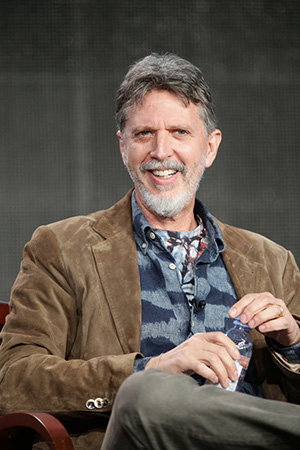
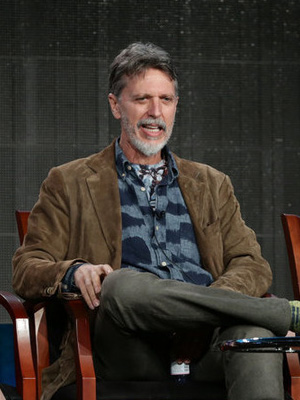
The series was created by and is executive produced by Tim Kring (Heroes) and Gideon Raff (Homeland). Kring recently talked to the media about the new series and the mysteries that it's based on.
Kring talked to SciFi Vision about the research into the mysteries and conspiracies that DIG is based around. “[Gideon and I] first had this idea about a murder mystery set in the old city of Jerusalem that uncovers a deep conspiracy, that had to do with all kinds of biblical prophecies and end of days ideas.
“And all you have to do is do a little bit of research and a floodgate of material comes your way.
 “So it was really a matter of scratching the surface of it and opening up those doors. We had a researcher that we worked with on the ground in Israel, as well as Gideon and I did three trips to Israel where we did research.
“And we uncovered all sorts of very interesting real life sort of, not conspiracies, but, you know, prophecies and people that are still to this day very interested in seeing those prophecies come about and have institutionalized them with their various organizations and churches that are dedicated to seeing that some of these prophecies actually come true.
“So it was interesting to realize that there is a very, very large number of people out there who are actively in pursuit of these prophecies.”
To get people more involved in the mysteries, USA Network has launched the online puzzle, DIG Decoded, that viewers can partake in and win real prizes, as well as other online content to help fans “dig deeper.” Kring told the site, “We actually have a whole series of narrative content that lives online. And you can activate it through not only the app that allows you to interact with, you know, some of the marketing of the show, but on Wattpad, which is an app that allows you to tell that story online. [It] uncovers a whole other layer of the narrative.
“So if you are able to access it and want to access it, you can have a much deeper kind of connection to the narrative that is additive to your involvement watching the show. The idea was to try to tell a story where people actually live, and they live online, and they live on mobile.
“And so to actually be able to push narrative for the show in all of these varying platforms, that gives the audience a more participatory experience on the show.”
The executive producer also talked to SciFi Vision about casting the series. “We ended up with just a really fabulous cast. And I have to say it was one of those casting processes that was kind of painless. Sometimes they’re very difficult. Casting can really be hard.
“Gideon and I are able to say with completely straight faces - usually you can’t do that, in this case you can - that Jason Isaacs was our first choice. And, you know, we had met him while we were writing the script on spec.
“We had met him at an event and just coincidentally, and we kind of cornered him and talked to him a little bit about the project. Unfortunately, he was on a show called Awake at the time. And so he literally was just a twinkle in our eye. It wasn’t a possibility.
“And we were sort of from that moment on, writing it for a Jason Isaacs type. And we kept sort of, you know, thinking of him. And sure enough, by the time we finally set up the project and got it going, Jason was available.
“And so how often does that actually happen that the guy that you have in mind when you’re writing the words on paper, is actually the guy you end up casting? So that was the big part.
“Then with Anne Heche and Lauren Ambrose and David Costabile and Regina Taylor, it just kind of all fell into place. And we very quickly were able to actually find this casting. The most exciting part of the casting process though, was casting out of Israel, which was a really unique process, you know, mainly done remotely from California, looking at casting tapes. But I will say that the depth of talent in Israel is just spectacular.
“And I was very excited by it, because when I cast in LA you tend to see a lot of the same faces that are on lists for various parts.
“And to be able to see a very deep bench of casting tapes for each one of these parts, you literally - sometimes there were four or five people that you could just flip a coin and choose that would have been all terrific.
“And seeing all of these fabulous faces that the American audiences are just not used to seeing, was really exciting. And I think it’s going to add to the unique look and feel of the show. And we were able to cast some of the best actors in all of Israel. The people that are on the show are actually huge stars in Israel.”
Kring added that most of the production in Israel was very similar to the United States. “Israel has a very vibrant and, you know, deep kind of production television business over there. And it was actually remarkable just kind of how similar their system was. And so in that respect no, the crews were terrific. And the casting process was very similar.”
There were, however, some problems with finding filming locations. “...We had this one story line that was set in the United States. And we all just sort of take advantage how, you know, certain looks for locations that you just couldn’t find there.
“And try as we may, we couldn’t find an American diner or an American gas station, you know, that sort of thing, [like] when we were in Albuquerque, you could throw a rock in any direction and find a location.”
USA Network Conference Call
DIG
Tim Kring
February 16, 2015
4:00 pm ET
SCIFI VISION: I’ve seen the first three episodes and I really love this show. I’m already deep in the mystery and wanting to know more.
And I was curious, I know in the behind the scenes special you guys talked about how a lot of this comes from kind of real life conspiracies and everything which is crazy and really fascinating.
But how did you first get into learning about this, or has this been something that’s interested you for a long time?
TIM KRING: Well I’m speaking right now, for both of us. Gideon is directing right now. It’s probably very, you know, mid-evening or late evening in Croatia, where he is doing the last few days of filming right now.
We first had this idea about a murder mystery set in the old city of Jerusalem that uncovers a deep conspiracy, that had to do with all kinds of biblical prophecies and end of days ideas.
And all you have to do is do a little bit of research and a floodgate of material comes your way.
So it was really a matter of scratching the surface of it and opening up those doors. We had a researcher that we worked with on the ground in Israel, as well as Gideon and I did three trips to Israel where we did research.
And we uncovered all sorts of very interesting real life sort of, not conspiracies, but, you know, prophecies and people that are still to this day very interested in seeing those prophecies come about and have institutionalized them with their various organizations and churches that are dedicated to seeing that some of these prophecies actually come true.
So it was interesting to realize that there is a very, very large number of people out there who are actively in pursuit of these prophecies.
SCIFI VISION: Great. And then as a quick follow up, can you talk a bit about the puzzle that’s going to be connected to the show, DIG Decoded, and how that’s going to go? Because that sounds like a lot of fun.
TIM KRING: Well we actually have a whole series of narrative content that lives online. And you can activate it through not only the app that allows you to interact with, you know, some of the marketing of the show, but on Wattpad, which is an app that allows you to tell that story online. [It] uncovers a whole other layer of the narrative.
So if you are able to access it and want to access it, you can have a much deeper kind of connection to the narrative that is additive to your involvement watching the show. The idea was to try to tell a story where people actually live, and they live online, and they live on mobile.
And so to actually be able to push narrative for the show in all of these varying platforms, that gives the audience a more participatory experience on the show.
QUESTION: In the show there are these three separate stories in three different locations. Can you talk about the production challenges of doing that? Like did you treat them as three separate movies when you were filling them? How did you go about tackling that?
TIM KRING: Well the stories were boarded together for the most part, although we did, at the very beginning, close to a year ago, start our production in Northern Canada where we shot the snowy stuff set in Northern Norway. We doubled Northern Canada for Norway.
And so that was a separate production. And then the stories, you know, start to slowly come together. We fortunately were in both Croatia and Israel as well as New Mexico. And to be really honest, we started boarding kind of everything together.
And we shot scenes that take place in Israel in New Mexico and Croatia. And we shot scenes that take place in Croatia, in Croatia. And it all just kind of, you know, right now we’re in Croatia, shooting scenes that take place in Jerusalem.
So wherever we are through the magic of production design and filmmaking, we were able to create these different locations. So the stories actually didn’t have to be boarded completely separately.
QUESTION: One theme we’ve seen with your other shows like Heroes and Touch, you have this sense of everyone across the globe is interconnected. And the stories that seem separate, they all come together. What draws you to this theme that seems to be central to a lot of your projects?
TIM KRING: Well, I think there are a couple of things. I mean first of all, I seem to have become very interested in the idea of how small the world really is. And this notion that what happens in one place affects someone else.
And we’re seeing that I think in our own lives, much more with a global economy and climate change, and, you know, all it takes is for something to happen 10,000 miles away, and we instantly can feel it now. So it is a theme that I’m interested in.
But I also really enjoy the kind of pastiche storytelling of watching separate stories slowly collide with one another. I think the audience gets to participate in trying to guess, or at least, you know, try and decipher how one story will connect with another.
And with the ten episode arc that we have on this, it works out really, really well when you introduce these stories in separate places and then watch them come together. By the end it’s all one big story.
But you’ve earned it by your participation as an audience in, you know, trying to figure out how they’re going to come together.
QUESTION: Last summer, you were saying that you were hoping you’d be able to go back after the pilot and shoot more in Jerusalem, and apparently that didn’t work. And then we followed from that that you had moved it to Albuquerque and now part of it in Croatia.
 So kind of take us through that. Were you able to pretty quickly change gears and move it to Albuquerque? And what parts of it just don’t work in Albuquerque that it was important to shoot it in Croatia instead?
TIM KRING: Well we are shooting a lot of the exteriors for Jerusalem are in the old cities of (Split) and Dubrovnik and other places in Croatia that double beautifully for Jerusalem. It’s kind of amazing that these smaller kind of older cobblestone walled cities - if you put the camera in the right place and you production design it in a way other than some of the signage and that sort of thing, it’s really amazing how well it doubled for Jerusalem.
And I really defy the audience to tell when we actually are shooting one or the other. We had a storyline set in New Mexico in the show. And while we were in Israel, we were actually struggling with how to film it in Israel, trying to find the kind of iconic imagery that we always associate with the American Southwest, especially when you get out of the kind of desert environment of, you know, cafes and motels and diners and gas stations.
Those kinds of things were really giving us a lot of trouble in Israel. So that is one of the kind of benefits of the logistical, you know, of having to move a production. Suddenly that stuff became very easy. And we built sets in Albuquerque, on sound stages that we were building in Jerusalem, in Israel. And so those were, you know, exactly the same experience when you are in a sound stage.
So all in all I think, you know, piecing it all together, it worked out actually very, very well. Other than the little time jump that we had to, you know, the lost time of having to restart our location, it actually ended up not being such a bad thing.
QUESTION: Just roughly, how long was that time jump? How long did you delay before you kind of figured out what you would do next?
TIM KRING: I think we were close to a two month delay between when we were going to start shooting in Israel and when we started again in Croatia. It was close to two months...
QUESTION: You [and Gideon] talked [before] a little bit about how you wrote this project on set. Can you talk a little bit more about that and how it came together, and then how you decided where to take it and where to make this series?
TIM KRING: We started talking about this - we were introduced to one another, we shared an agent and we got introduced to one another. And we had both been kind of fans of each other’s work.
And Gideon had a, you know, sort of the core idea of wanting to do a murder mystery set in what is his home town of Jerusalem, and centered on the kind of archaeological dig sites that are going on all over the city. And we really hit it off.
And we just decided that we wouldn’t try to sell this idea, you know, for development, that we would just write it ourselves and not go through the development process on it for any particular network’s need.
And so we started working together. And when we wrote the pilot we went out on the open market and we ended up at USA for all kinds of reasons, but not the least of which, was the guarantee of doing the whole series.
And so that - which was a big thing to be able to not just be in the pilot business where you’re making a pilot and then hoping that it is , you know, good enough to get picked up.
The ability to be writing towards something that was actually going to be a whole series was really a big lure for us. And USA presented us with that opportunity and we jumped at it.
QUESTION: Great. I know this is definitely jumping the gun, but are you guys definitely thinking about what mysteries you might pursue in the future like what the next season might look like, anything like that step?
TIM KRING: Well this was always written as a one off. It was designed to be a limited series. But that being said, we also knew in the back of our minds that in success, this idea of a legal attaché which is a, you know, an FBI agent stationed in the consulate of a foreign country who investigates crimes against and by American citizens on foreign soil, is a pretty compelling premise for a franchise.
And so we thought about it more as a franchise than as a series. In other words, if it comes back it comes back with a whole new case, a whole new idea to explore, and a whole new setting - you know, when this started, we were taking advantage of the country of Israel [and they] really rolled out the red carpet for us.
And I think we’re all seeing that now in production that this is a real possibility where it didn’t used to be, to be able to go and shoot in a really fabulous, exotic location.
And so in success, if somebody wants to do this in another place, and this has a premise that can be adapted for another version of this.
SCIFI VISION: Can you talk a bit about the casting process?
TIM KRING: Sure. Yeah. We ended up with just a really fabulous cast. And I have to say it was one of those casting processes that was kind of painless. Sometimes they’re very difficult. Casting can really be hard.
Gideon and I are able to say with completely straight faces - usually you can’t do that, in this case you can - that Jason Isaacs was our first choice. And, you know, we had met him while we were writing the script on spec.
We had met him at an event and just coincidentally, and we kind of cornered him and talked to him a little bit about the project. Unfortunately, he was on a show called Awake at the time. And so he literally was just a twinkle in our eye. It wasn’t a possibility.
And we were sort of from that moment on, writing it for a Jason Isaacs type. And we kept sort of, you know, thinking of him. And sure enough, by the time we finally set up the project and got it going, Jason was available.
And so how often does that actually happen that the guy that you have in mind when you’re writing the words on paper, is actually the guy you end up casting? So that was the big part.
Then with Anne Heche and Lauren Ambrose and David Costabile and Regina Taylor, it just kind of all fell into place. And we very quickly were able to actually find this casting. The most exciting part of the casting process though, was casting out of Israel, which was a really unique process, you know, mainly done remotely from California, looking at casting tapes. But I will say that the depth of talent in Israel is just spectacular.
And I was very excited by it, because when I cast in LA you tend to see a lot of the same faces that are on lists for various parts.
And to be able to see a very deep bench of casting tapes for each one of these parts, you literally - sometimes there were four or five people that you could just flip a coin and choose that would have been all terrific.
And seeing all of these fabulous faces that the American audiences are just not used to seeing, was really exciting. And I think it’s going to add to the unique look and feel of the show. And we were able to cast some of the best actors in all of Israel. The people that are on the show are actually huge stars in Israel.
SCIFI VISION: Okay, great. I was just going to ask - you made me think - is there anything else besides casting that you found either different or more difficult because you were in Israel filming, and in Croatia.
TIM KRING: No. Israel has a very vibrant and, you know, deep kind of production television business over there. And it was actually remarkable just kind of how similar their system was. And so in that respect no, the crews were terrific. And the casting process was very similar.
Again, we had trouble, as I said, we had this one story line that was set in the United States. And we all just sort of take advantage how, you know, certain looks for locations that you just couldn’t find there.
And try as we may, we couldn’t find an American diner or an American gas station, you know, that sort of thing that you know, like I said, [like] when we were in Albuquerque, you could throw a rock in any direction and find a location.
QUESTION: This is probably old hat to [Gideon], some of these things. He’s familiar with the great old stories and familiar with Jerusalem and so forth.
So give it to us from your eyes, because you’ll kind of probably approach this in some ways the same way as the viewer will, as someone who some of these stories are new to you and some of the settings are new to you. Just tell us parts that just kind of struck you in different ways.
What was it that captured you both visually about the place and just emotionally about the stories?
TIM KRING: Well, the first is the visual, the visual of being in Jerusalem. You know, when we first went on a kind of a research trip together everything changed for me. It suddenly - the actual feel of being in a city that’s 3000 years old and where history is everywhere.
And in terms of the actual locations, we were filming in places that literally not only have they not been filmed in, but the public was not allowed to go into.
And so when you are walking on stones that, you know, people have been walking on continuously for 3000 years, it’s kind of amazing. And the wonderful thing about it was that I was so used to - most of my shows have been shot in Los Angeles.
And you know, any part of the world that we’ve been in, we’ve doubled Los Angeles for it. So we, you know, put a green screen up and production designs an alley to look like a market in Tokyo or something.
And everything is fake and everything is production designed and everything is, you know, computer generated. And you have to paint out the palm trees or whatever, you know, that sort of thing.
And to actually go and be able to point the camera in a direction and have everything be authentic, was really just amazing.
And then to be in a city like I said, like Jerusalem, where you feel not only that history, but the tension and the collision of these major religions that are all stacked on top of one another - the Church of the Holy Sepulcher, the Temple Mount, the Al-Aqsa Mosque, they’re all within a half mile of one another.
Literally, you can walk from one to the other in three minutes. So all of the things that we had been sort of speculating about on the script suddenly became very, very real.
So, like I said, we immersed ourselves very much into the history of the place and went to all of these archaeological digs and met with various, you know, consultants. And it’s one of those things where I think back and I can’t remember not knowing about these things, because they’re really very much in the front of my mind now.
QUESTION: And then the emotional - as far as the story’s part. I mean, when you come across some of these stories that you maybe had never heard before...because these are obviously bigger, different stories than we’re used to growing up with. What struck you about them?
TIM KRING: Well, you know, one of the themes that we are dealing with is fanaticism and the length that people will go for their beliefs. I have had a long fascination with a lot of this stuff.
I was a Religious Studies major in college and have always been very interested in what people find meaning in and how they find meaning in a complicated world.
So for me, it was about actually immersing myself in the real places where I had read about and grown up studying some of this stuff. But, you know, you do find that fact is stranger than fiction.
And that people are still very much pursuing some of these prophecies is both sort of exciting and gives you pause at times.
QUESTION: There’re a lot of people that are binge watching shows these days. Is that something that you take into account when you’re figuring out how to tell the story?
Like is this going to be watched week to week or is it going to be watched all together, someone sits down for ten hours straight and watches all of this?
TIM KRING: Well I think that that has changed quite a bit in the last - since, you know, my last kind of real serialized show was Heroes. And we very much made it a week to week viewing.
 So the cliffhanger became a big weapon in our arsenal, to try to get you over that, you know, six more days of waiting for the show to come back. And in many ways, that’s a very high bar to set for yourself, to have a cliffhanger that keeps the people interested.
One of the things that we all learned in television, you know, everybody who has a show, for years heard the same statistic about how even the most loyal viewers of a show would only watch one out of three episodes which, as someone who made television, I always round that hard to believe, because you want to believe people who love your show are watching every episode.
But I think statistically it was true that people who considered themselves the most loyal viewers were only watching one out of three. Well nowadays I think the most loyal viewers are actually watching every episode.
And because they’re watching every episode, you can be a little less pedantic. You can spoon feed a little less than you used to do.
Making a serialized show before, we were always asked to explain things in the next episode that the viewers may have missed if they were just joining in now.
Well now, because of the ability to find all that information, to watch the show when you want to watch it and to find that information online with various fan sites and some chat rooms or, you know, people that do recaps and talk about the show, the audience now has I think a much greater ability to stay caught up on a show.
And so I think it has changed the way people are making these serialized shows. They can be much more seamless from episode to episode, which I think is a very good thing.
...By the way it’s designed to watch, you know, obviously week to week on television. But clearly designed to watch in the way that people are watching shows however they, you know, however they find it.

Latest Articles
Interviews
 I See the Demon: Alexis Zollicoffer, Noah Kershisnik & Dave Martinez on Trust and Deception
Wednesday, 28 October 2026
 Mackenzie Crook & Pearce Quigley on Small Prophets' Origins, Characters & Creatures
Tuesday, 27 October 2026
 Dark Matter: Jimmi Simpson on Ryan's Strengths & Acting Opposite Himself in Season 2
Sunday, 25 October 2026
 Outlander: Blood of My Blood - Sam Retford & Bobby Rainsbury on Dougal's Rescue & Maura's Loyalties
Friday, 23 October 2026
 Outlander: Blood of My Blood Director Emer Conroy on Battle Logistics, Camera Choices and Character Moments
Sunday, 18 October 2026
 Outlander: Blood of My Blood Showrunner Matthew B. Roberts on Introducing Gerard Grey, Book Lore Connections & Telling Women's Stories
Friday, 16 October 2026
 Orion: Drew Van Acker & Debby Ryan on Layered Performances & Shifting Truths
Monday, 12 October 2026
 Guillermo Navarro on Pan’s Labyrinth’s 20-Year Legacy, Oscar Win & the Craft of Cinematography
Sunday, 11 October 2026
 Orion Director Jaco Bouwer on Building Tension and Creating an Otherworldly Atmosphere
Friday, 09 October 2026
 Dark Matter: Amanda Brugel on Blair's Big Reveal, Her Trauma & What's Ahead in Season 2
Wednesday, 07 October 2026
Reviews


