SciFi Vision | Interviews | Jason Ralph and Sera Gamble Talk The Magicians, Premiering Tuesday on Syfy
Jason Ralph and Sera Gamble Talk The Magicians, Premiering Tuesday on Syfy
 Tuesday Syfy premieres the first two episodes of its new series, based on the New York Times best-selling book series of the same name by Lev Grossman. The series follows Quentin Coldwater, played by Jason Ralph, as he puts away his fantasy novel obsession to move on to graduate school and adulthood. Quentin, however, is suddenly whisked away to the secret New York university, Brakebills University for Magical Pedagogy, where he learns that not only is magic real, but the fantasy world in his beloved books, Fillory, might be as well, and his own world is in danger.
In preparation for the premiere, executive producer Sera Gamble and star Jason Ralph recently talked to the media about the new series.
Ralph told SciFi Vision that he read the books and really enjoyed them. "I read them during the audition process, and before it ended, I had become a very quick and very rabid fan."
Gamble talked to the site about the similarities and differences in the series compared to the books. "Well, I think the first, most obvious difference that the fans will notice when they tune in is that we’ve aged the characters up a little bit. Quentin is 17 when you meet him in the book, and he is more like 22 in our television show. They are headed into graduate school. And we did that for a number of creative and practical reasons."
For more, read the transcript below and don't forget to tune into Syfy Tuesday night.
Syfy Conference Call
The Magicians
Executive Producer Sera Gamble and star Jason Ralph
January 19, 2016
4:30 p.m. ET
SCIFI VISION: Jason, did you read the book before you auditioned, or after you auditioned, at some point?
 JASON RALPH: I read them during the audition process and before it ended, I had become a very quick and very rabid fan.
 SCIFI VISION: OK. Great. And can you both talk about how the story is going to be similar and yet differ from the book series story-wise? Things like that.
SERA GAMBLE: Well, I think the first, most obvious difference that the fans will notice when they tune in is that we’ve aged the characters up a little bit. Quentin is 17 when you meet him in the book, and he is more like 22 in our television show. They are headed into graduate school. And we did that for a number of creative and practical reasons.
But when we realized that this is a choice we might have to make, John McNamara, my writing partner, and I took it very seriously. We didn’t want to change anything from the books that we didn’t have to, so we sat down with Lev Grossman, the author, and hashed out what that change would mean and we all realized we really loved it. So, I think that’s been for the best.
And I think throughout the season we’ll be hitting a lot of the greatest hits of book one. We sometimes come at them a little bit differently. We say we have the same general roadmap but we sometimes take slightly different roads than Lev did in the books.
QUESTION: I’m a fan of the book and I think I didn’t notice this much when I’m reading, but when you see the characters come to life on screen, it was really great to see how many women there were versus men, where on TV these days it’s usually shows dominated by men. Do you think you could speak a bit about the women? Both the actors of the show and the characters?
SERA GAMBLE: Should I take this one, Jason? I mean, we inherited these great female characters from Lev and one of the great things about making this as a TV show is we get to deep-dive into more of the characters. I think when you read the books, you first and foremost are inside the experience of Quentin Coldwater. But because we spend many, many hours in this world, we get to spend a lot of time in Julia’s point of view and a lot of time in Alice’s point of view.
And it’s not something I think about when I’m writing. It’s just sort of - we break the story in the room and we do what makes instinctual sense to us. But I do have to say that in the editing room, there are times when there are scenes that are three female characters talking about these important things that are happening in their lives and all the conflict that’s going on. And as a viewer in that moment, I get a little charge. I get excited to see all of these interesting three-dimensional female characters figuring their shit out together.
QUESTION: Are there any stories that either of you read growing up that grabbed you the way that this series has grabbed so many fans?
JASON RALPH: I grew up with the Harry Potter series and had had a very similar experience with that. But I say, strangely enough, the strongest experience I’ve had to a story is this made-up one called Fillory. And I don’t know what it is. But the time when I, as Quentin Coldwater, get to talk about Fillory my body, all the nerves in my body just spark and my brain goes crazy and I can’t think and I can’t make words because I’m so in love [with] this make-believe world. And it’s very strange and I can’t explain it.
QUESTION: Sera, any for you?
SERA GAMBLE: I loved The Chronicles of Narnia. When I was a little kid I read those many, many times. And I also gravitated strongly towards classic fairy tales. I just -- I wore holes in my books as Grimms’ Fairy Tales and Hans Christian Andersen and I remember being a little kid and trying to write my own version of those classic fairy tales. So, I was kind of born ready to do the show.
QUESTION: I know you talked a bit about the actual magic in the show and the physicality and the practice of it. So I’m wondering if you could talk just a little bit more about how you created the finger magic and the spells that are in there.
And also, how much are you adhering to some actual magic in the sense of spells or items you might be using, like real people who had that interest or that background? Will they recognize certain aspects of these stuff?
SERA GAMBLE: Go ahead.
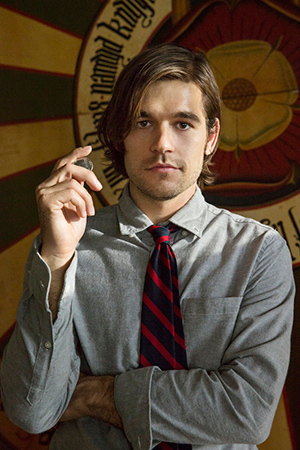 JASON RALPH: No. You win.
 SERA GAMBLE: Are you sure? I was going to say you can speak to the experience of learning those finger tutting spells. I’ll just say that when we were doing the pilot, we came across this - essentially, it’s a form of dance, called finger tutting, which is an offshoot of tutting which is a little corner of the world of hip-hop, because we were searching for a way to kind of codify the language of magic which is very specific and arduous and difficult and intensive, and it’s done with the fingers, primarily, in Lev’s books.
So, it was actually John McNamara’s assistant. He recommended we go on YouTube and just search the term “finger tutting.” And as soon as we saw that, it felt really fresh and good to us and we hired a choreographer to work with the actors. But Jason can speak more to that.
JASON RALPH: Yes. The experience, learning these tutts, I found like very similar to the experience of learning the magic that I had to learn for the show, like the practical magic, the card tricks and the coin tricks and things. And that is –incredibly difficult. It requires such a mind for detail and it takes too many hours to practice and to get right.
And there is something about learning how to learn those kinds of things which was very useful in getting into the head of these kinds of people and into Quentin. There’s people who can dive into material for hours and hours and hours and work on one tiny little specific thing without getting bored of it. Learning how to do that was very useful.
SERA GAMBLE: And as for the Google-ability of the other spell elements, I would be curious to hear from an actual practicing [witch] if any we’re getting anything right. We might. I don’t know. I do know that we Google the craziest shit all day long in the writer’s room and I had been reading about this sort of new age solution to the radiation that comes off of computers, if that in fact exists, which I’m not sure if it does. I don’t know.
But I was reading about this crystal grid that someone had set up to minimize the bad stuff that comes off your computer and that turned into a mind meld with our production designer, Rachel O'Toole, about what they would have to do at Brakebills in order to use conventional electronics. Because essentially, Brakebills University is a place where people have been doing spell upon spell upon spell for many generations. And so the air is very thick with enchantments and a lot of your “so to say” muggle hardware malfunctions at Brakebills.
They don’t use cellphones very much, and they don’t use computers very much because they’re just not reliable in that atmosphere. So there are little rooms that the students have kind of jury-rigged in order to do things like play video games and use their cellphones and look things up on Google. And it’s one of my favorite sets, though it’s quite tiny. Alice and Quentin sneak into this little supply closet that students have jury-rigged with a bunch of crystals to be able to use computers in there. The visual, it’s really beautiful and it came from this random Google in the writer’s room.
QUESTION: In the show there are different magical cliques basically, and groups. So, which group would you both say you’re in as a person? Where would you put yourself or where would you want to be?
SERA GAMBLE: Where would you want to be, Jason?
JASON RALPH: Everyone wants to be a physical character, right? It’s like being a Gryffindor.
QUESTION: I was wondering, Jason, whether or not your sleight of hand that we saw in the premiere episode is for real and you had to learn that sort of thing and whether or not, Sera, if you could tell us, there are any other talents among the cast?
JASON RALPH: Yes. All of the sleight of hand magic you see is totally 100 percent real. And I have been practicing that with Mike Cahill. I sent him the video of me doing it. And he was like, “Oh, man. You just saved us like $70,000.” And I was like, “All right. You owe me like a really nice bottle of wine.” Which I’ve yet to get, actually.
SERA GAMBLE: Maybe you can help me answer the question about other talents. I can say that there are some tremendous singers in our cast and you’ll be treated to a little bit of that in season one.
QUESTION: One of the things that most struck me about the show is that we’re getting to see Julia’s story parallel to Quentin, as opposed to catching up with her halfway through the novel. I was wondering what effect that’s had on the approach to the overlooking story at the show.
SERA GAMBLE: It definitely makes the story of season one a bit more of a two-hander. You’re with Quentin and he’s very much our way into Brakebills and we’re deep into his story. But at the same time, we’re seeing a very parallel story unfold for Julia. She’s the one who didn’t get into Brakebills, she has to either give up magic or figure out some way to get it on her own and it turns out to be a much more dangerous and unreliable way of getting magic.
It also, I think, really heightens the relationship between Quentin and Julia. And if you saw the pilot, they’re life-long best friends and there’s a lot of layers to that friendship. And it became really clear as we were writing these two stories at the same time that she doesn’t just fade away from his life in that, “Oh, well. I’ve outgrown my friend,” kind of way.
There’s an active hurt and an active antagonism that grows from the way each of them handled the fact that one of them got into the school and one of them didn’t.
QUESTION: Jason, did you and the other cast do anything special to bond together as a group for the show?
JASON RALPH: Yes. Well, I mean, we got to shoot the pilot in New Orleans, a really amazing city and there’s a lot to do at night in New Orleans. So we got to go see a bunch of music and drink a lot and as a cast, a lot of us went to the magic castle in L.A. and got to see the magic firsthand, which was really wonderful.
QUESTION: Sera, were there any special challenges for you in working on the show, putting it together and everything?
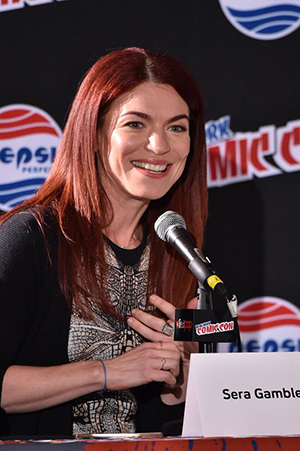 SERA GAMBLE: Well, we’re trying to do justice to the spirit of the books. That’s probably the thing that wakes us up in cold sweat the most. But the good news is that we have this amazing cast. And I think we, across the board, lucked out.
 And that’s the first, most important piece of the puzzle I think for a TV show. Every challenge is the challenge of making the show on the schedule and the budget of a television program. But I’m not even – I’m not being facetious when I say this. I really believe that those constraints also make the work better in that we have to pick our moments really carefully. We have to make sure we really know what (these beats) are about. We don’t have any room to waste time or money on the show.
So, we put every line and every page through boot camp before we go shoot it. And hopefully that makes the end product better and more exciting.
QUESTION: In acting and also from a conceptual approach to developing Quentin - what was that like? You aged him a little more, and then to age him, but yet be faithful to the books. And talk about that challenge in developing him and then playing him?
SERA GAMBLE: Developing first then playing, is that order we’re doing, Jason?
JASON RALPH: Yes.
SERA GAMBLE: OK.
JASON RALPH: Let’s do that.
SERA GAMBLE: Once we wrapped our head around it, actually, it wasn’t hard at all. The Quentin story is a coming of age story. It’s a story about someone who is young and walking into the problems and the wonders and the challenges of the adult world and becoming the man that he is going to be. And that story is perfect to tell about someone in their early 20s.
I think that matches up with where we are as a culture right now. I think we do a lot of our maturing in our early 20s. And I don’t know. I think it ended up working out really organically.
QUESTION: And Jason, playing him?
JASON RALPH: Yes. I had a very similar organic experience with it - of getting to read the books and falling in love. And then filtering through that, that through me then through the lines of the show, I don’t know. Something just spewed out that is my Quentin Coldwater. And it came very naturally, and it was very fun to do.
And at the same time, from an academic perspective of really going back to the books as much as possible and re-reading the sections from the books that we happen to be shooting that day to bring the spirit of him through me. Or at least the spirit of him that I experienced, through the filter of me.
QUESTION: And I have to agree also that with (Fillory), as soon as I saw the first few moments of Fillory I go, “Hey, that’s more interesting than the party was.”
JASON RALPH: Yes, right?
QUESTION: I want to see more and I’m glad it’s not just a story he’s reading. He’s very much wrapped up, which is cool.
JASON RALPH: Yes. It’s a part of their life; it’s a part of his DNA.
QUESTION: Jason, I was wondering if you could tell us a little bit about the fan interaction you’ve had so far with people being able to see some of the episodes early. What kind of response have you been getting?
JASON RALPH: It’s been so wonderfully supportive and people seem really excited about the project and about our interpretation of the characters and of the show. Especially at Comic-Con, we had such a wonderful time, a lot of people came.
[They were] a little skeptical, as they should be. And I think after what they saw from the show and from us on the panel, came away really excited and very supportive. I had like a post-panel discussion in the men’s room after the panel. Like one-on-one interactions with all the fans.
And I tell you what, it was the best. I’m so glad that I happened to have to go into that bathroom because they had such great questions and were very honest about being skeptical at first and that they’re like – but we changed their minds or left them with some confidence, which is was really cool.
QUESTION: Was there anything you added to Quentin that may not have originally been scripted for you?
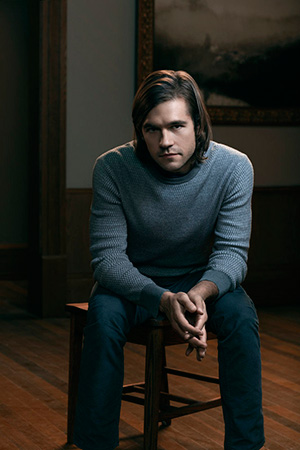 JASON RALPH: Not intentionally, I don’t think. It’s all through my filter and experience of the world, I suppose, but I tried to be as faithful to the books and to the scripts as possible.
 QUESTION: Has there been any reaction thus far from the author, and if they’ve liked the show so far or not?
SERA GAMBLE: Yes. Lev is an active part of the making of the show. He reads the scripts before our bosses do and he sees the cuts before our bosses do. So, we’re very transparent with him about the process and we ask for his advice at times and he sends us really thoughtful interesting good notes.
No one knows the DNA of the world better than he does. He lived in it for 10 years. So, he has a lot of really good smart things to say about the magic, so he’s been really helpful in making this TV show.
QUESTION: Has there been any wincing on his part from some of the ideas that you’ve come up with that have veered away from the book? And he’s like, “No, I’m not feeling that right now.”
SERA GAMBLE: Well, he certainly hasn’t agreed with 100 percent of everything we ever pitched, so he’s always very gracious about it. But I don’t – my perception of it is that it doesn’t come from the feeling that we’re diverging from the books. He really does take the ideas of the show on their own merits and understands that we’re making a version of the story and that we’re making an iteration and adaptation and that it will be the same in some ways and it will by necessity, and also because it’s an organic growing thing, it will be different in certain ways.
So, I don’t think – he certainly doesn’t stress out about that to us. He really takes each script and each story as it comes and talks about what makes sense to him and what doesn’t or what appeals to him emotionally and as a fan of fantasy and what he’s having trouble wrapping his head around. And so we just have a writer-to-writer conversation about it.
QUESTION: As someone who comes to this who’s not familiar with the books, I must admit, for people who aren’t familiar with the background story and who have maybe only seen the synopsis of the first episode, they might think that this is a mature version of Harry Potter in a way, with the university setting and so on and obviously magic being a big part of it.
So, are there ways in which you hope you can leverage off of that and in other – how would you say this show differs distinctly from Harry Potter and separates it from that?
SERA GAMBLE: Yes. I mean, when Lev wrote the book – and by the way, you don’t have to have read the books by any means to enjoy the show. I think the books can be enjoyed on their own and the show can be enjoyed on its own or you can do both.
But Lev, the idea for The Magicians came because he was waiting for that Harry Potter book that was taking too fucking long. And he did this thought exercise that was instantly appealing to me when I read the books that I think it’s something that a lot of people do, which is apply the tropes and the stories of a fantasy story to your own life.
And in the case of Harry Potter, it’s like, “OK. Here are these kids who have magic and they have the problems of heroic children.” And then the question is, what would this be like in actual current day New York City among older people who have the problems of everyday adult life? What does magic mean in that circumstance? That was one the core ideas that The Magicians was borne out of.
So, the inspiration of Harry Potter was a knowing one and was one that I think those of us who really love Harry Potter enjoy because it’s an adult story. It’s a story for us now. It doesn’t have the same kind of black and white ideas of good, evil, destiny, heroism. It takes that through the blender of adult life when everything gets much, much more complicated and less easy to chart.
And that I think is also maybe the answer to the question of how it differs from those stories, I think. I think the emotional life of the story is really complicated and the DNA is much more adult.
QUESTION: My question expands on what you already hinted on with the separation of Quentin and Julia. How does that affect your friendship going forward and will there be a confrontation - magical one - down the road?
JASON RALPH: I feel like their lives are destined to keep running into each other...
SERA GAMBLE: I can give you a minorly spoilery answer that goes to what we do a lot on the show. Which is yes, there’s confrontation coming between the two of them. I mean, after what you see in the pilot, it’s clear they have some issues to hash out.
Magic is the subject. The confrontation is totally human. There’s a scene that I really enjoy between the two of them in an early episode in the season that would not be out of place on a show with no magic. And there’s a ton of magic in that episode and they do a ton of magic in that episode.
And magic is the reason that they’re having a conversation that they’re having ostensibly, but they’re having the talk that two former best friends need to have because both of them have tripped up and they have damaged the relationship. So, we really try to make sure that the character journeys on the show would make just as much sense if you tuned in a show in a world where magic weren’t real.
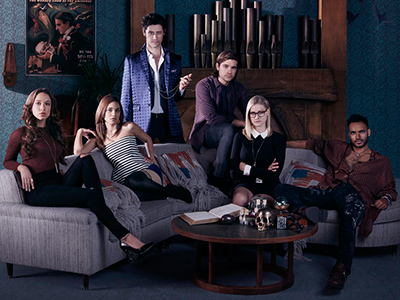 QUESTION: Jason, what about Quentin Coldwater attracts you to the role and you see parts of yourself in him?
 JASON RALPH: I like that he’s not a classic hero and never will be. He’s not the chosen one but he is sort of thrust down the throat of this hero’s journey and is coming to terms with that and coming to terms with that fact that something that he’s always wanted and that – sort of ill-equipped for it. I like that he’s not always likeable. There are things about him that are despicable and those are fun things to get to play.
But there’s something about him that keeps you rooting for him because I think it’s the human – I think that’s what makes it relatable, that none of us are perfect human beings. And I think the show really explores the flaws in humanity and in these characters. And that we’re forced to embrace them in order to move forward.
QUESTION: I thought of Chronicles of Narnia and Harry Potter, too. So, I was thinking how do I describe this show without using Harry Potter and The Chronicles of Narnia? So, how would you describe it? Both of you.
JASON RALPH: I feel like it explores what it would be to have magic within the context of the real world, of this world of New York City right now with real people.

Latest Articles
Interviews
 Dark Matter Season 2: Blake Crouch on Expanding Beyond the Book, Diverging from the Main Story & More
 Monday, 28 September 2026
 Outlander: Blood of My Blood Season 2: Harriet Slater, Jamie Roy, Jeremy Irvine & Hermione Corfield on Love, War, & Separation
 Saturday, 26 September 2026
 Outlander: Blood of My Blood S2: Matthew B. Roberts & Maril Davis on Trauma, History & Storytelling
 Wednesday, 23 September 2026
 Dark Matter Season 2: Dayo Okeniyi on Leighton's Hubris & Oluko's Faith in the Box
 Tuesday, 22 September 2026
 Tommy & Tuppence: Josh Dylan and Antonia Thomas on Modernizing Agatha Christie
 Tuesday, 15 September 2026
 Jimmi Simpson Breaks Down Dillard’s Walker Family and His Shocking Turn on The Walking Dead: Dead City
 Sunday, 13 September 2026
 Aimee Garcia on Renata’s Hope, Trauma, and Walker Transformation in The Walking Dead: Dead City
 Sunday, 13 September 2026
 The Walking Dead: Dead City's Showrunner on Moving Maggie & Negan Forward, Episode 6 & Where a Potential Season 4 Could be Headed
 Thursday, 10 September 2026
 Dark Matter Season 2: Jennifer Connelly and Joel Edgerton on the Emotional New Season
 Saturday, 05 September 2026
 Dreams in Nightmares: Charlie Barnett, Sasha Compère & Mars Storm Rucker Talk Personal Truths & More
 Friday, 04 September 2026
Reviews


